“There is only one teacher in Butoh, and that is the body.”
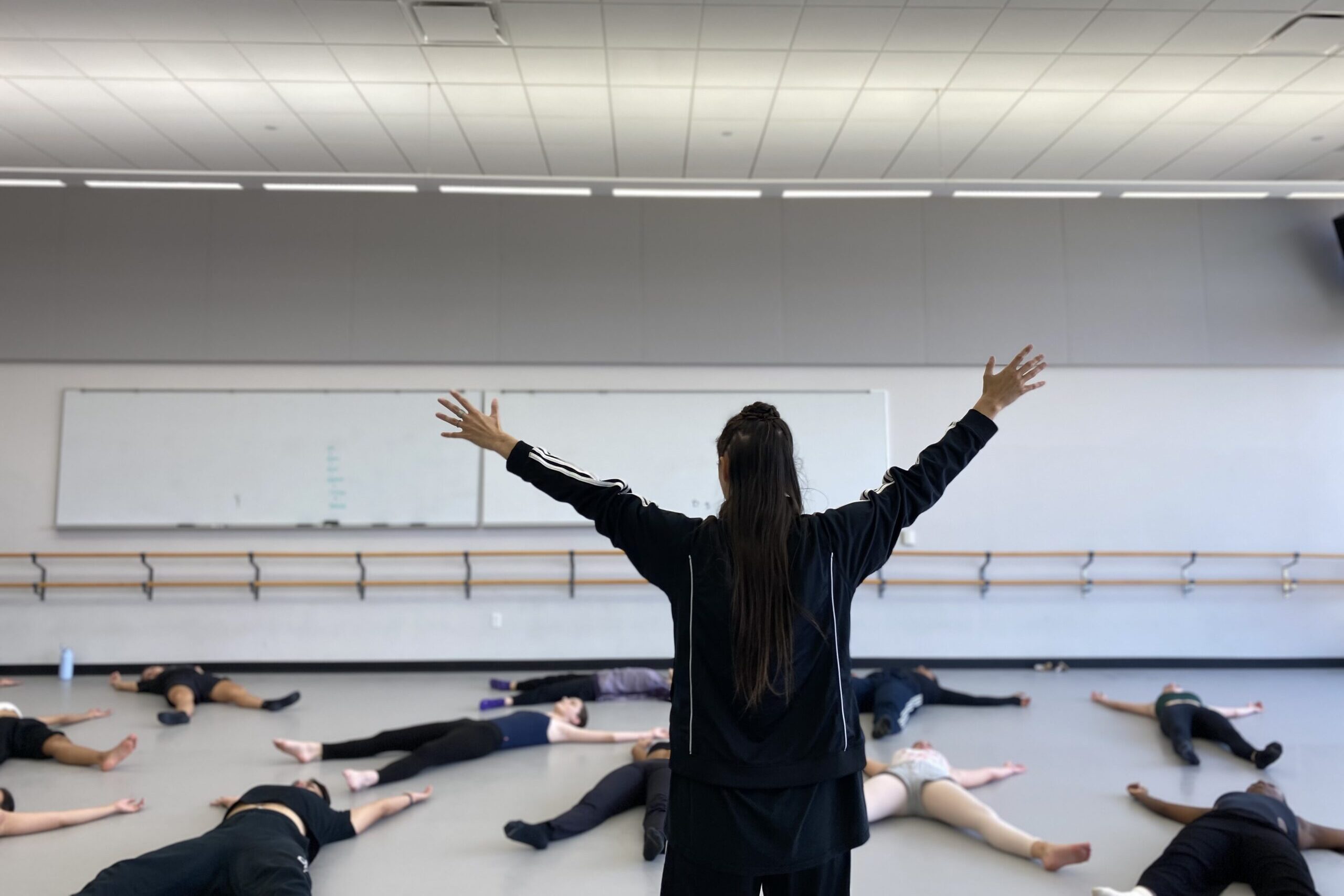
Sina Tafazoli and Hank Ramaikas, co-founders of the seven-month-old Philadelphia Butoh Collective, preface their debut performance, Pulsations/Troubadour, with an overview of the collective’s Butoh practice. Emphasizing the nonhierarchical approach to their convenings, Tafazoli stresses that they are not teachers, rather facilitators. There are no students, but participants.
Butoh emerged in Japan during the late 1950s as survivors of the US-imposed atomic bombings of Hiroshima and Nagasaki faced collateral devastation. Japanese artists, Tatsumi Hijikata and Kazuo Ohno created Butoh not only as a means of coping with the catastrophic cultural loss and humanitarian crisis, it was also a rebellion against the performance of social order, material affluence, and self-regard seen in ballet and modern dance popularized by the West. The dance form utilizes the body to move through inner inhibitions and suppressed emotion.
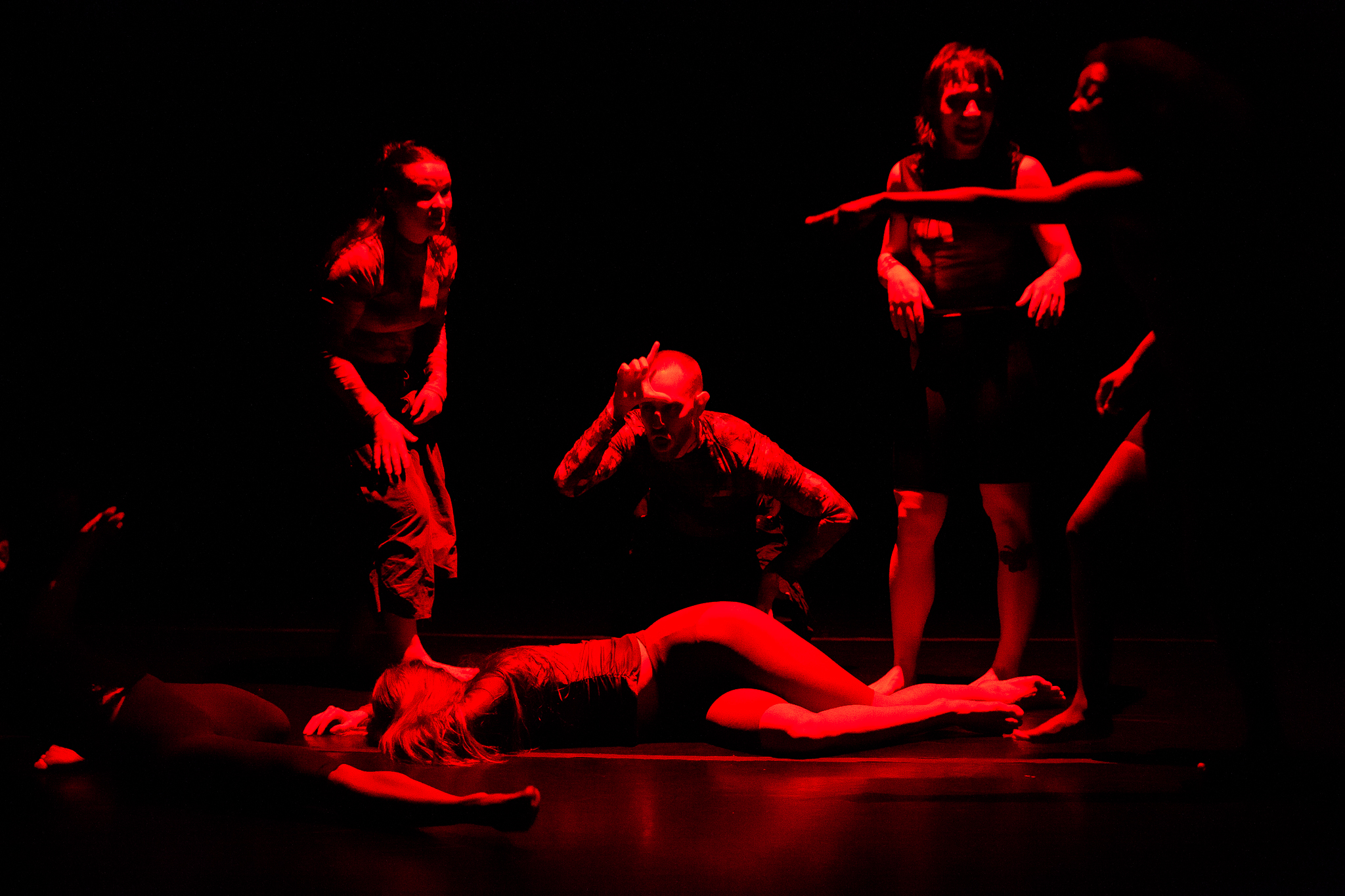
Pulsations, choreographed by Tafazoli, sequences through three separate movement explorations performed by Michelle Dunn, Miranda MacDougall with Tyler Kline, and Baylor Odabashian while live painter, Gisella Gordon, makes visual representations of the work in black ink as it unfolds in real time. The slow, methodical movement held by each performer has the potential to evoke a meditative state in viewers and performers alike. The recognition of another body in motion – especially in pedestrian form – is humanly relatable and holds a sincerity often neglected in spectatorship-driven performance.
In Troubadour, MacDougall, Kline, and Ramaikas make their way on stage from behind the audience. Their pace is slow and continuous. As their feet scuff against the concrete, every step has a heavy landing as if surrendering to a terrible fight against gravity. Their upper bodies are folded in half, limp, while arms hang, dragging along the floor with their hunched-over demeanor. Indulging every microcosm of movement, taking time to be moved by internal impulses, lingering somewhere between states of consciousness with just enough external attention to follow the score, which eventually leads to a cathartic crescendo. Roaring screams gutted from the belly of each performer, echo through the room. Their own boisterous noise seems to thrust them full throttle forward several feet where they land, then slowly simmer back to stillness.
Butoh’s notoriety for it’s shameless embrace of unruly, grotesque displays of body in motion is lived up to. There’s drool, (and lots of it), wailing, collapsed postures, and an unsettling proximity between performers and audience at times. Still, my critical eye and discomfort lies in the demographics of the artists presenting this embodied Japanese methodology. The performers are all white. Given Butoh’s deep roots in Japanese anti-colonial, post World War II cultural reclamation, I’m curious about the greater implications of race here. What responsibility do white Butoh dancers have to honor and preserve Butoh’s cultural origins, particularly when the practice is being developed without Japanese practitioners or teachers involved? Can practitioners living in the US utilize Butoh to interrogate their positions of privilege and power and sustain the integrity of the dance through its contemporary evolution?
Pulsations/Troubadour, Philadelphia Butoh Collective, The Perch, Sept. 13-20.