The hugely influential post-modern choreographer Trisha Brown died in March of this year. Several memorials are taking place in New York City. In Philadelphia, there’s also a memorial of sorts—a July 28 screening of the film In the Steps of Trisha Brown, which had its American premiere at the 2017 Dance on Camera Festival. Lisa Kraus, tD co-founder and former Trisha Brown dancer, who appears in the film, asks herself a few questions here.
How did In the Steps of Trisha Brown come about?
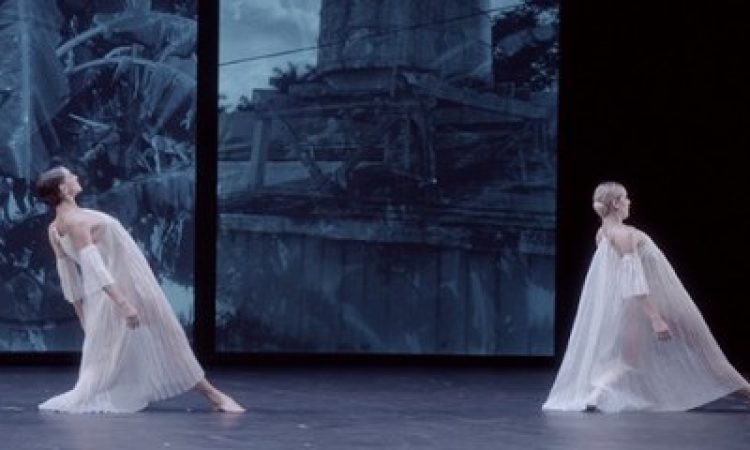
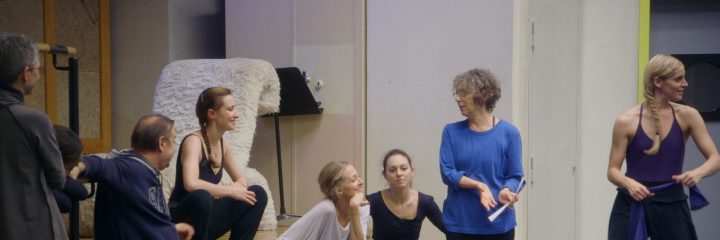
A French director, Marie-Hélène Rebois, contacted Trisha’s company a few years back, wanting to make a film about Trisha. She’d made a beautiful film about Merce Cunningham that convinced Carolyn Lucas, the Co-Artistic Director of the Trisha Brown Dance Company, that this was a wonderful idea. Marie-Hélène is based in Paris, so when Carolyn and I were at Paris Opera Ballet,* teaching the dancers Glacial Decoy, it was natural for her to come and film the process.
How was the film made?
Originally we thought it would be part of a much bigger look at all of Trisha’s work, so we were pretty relaxed about having Marie-Hélène and her crew come into the studio. They showed up several times during the five weeks we were working, including on the very first day. As it turned out, Marie-Hélène chose to have the film center on our process rather than more generally or on the Trisha Brown Dance Company. Our work turned out to be a good lens for looking at the sweep of Trisha’s history and legacy.
Why do you think this history and legacy are important?
Brown developed approaches to choreography that were new, that worked the body in all dimensions, and treated its parts democratically. She also developed collaborations with major artists of her era, in the case of Glacial Decoy with Robert Rauschenberg. A lot of this innovation has still not been digested, even by folks in the dance field! But above all, the work has a unique formal beauty and physical abandon. It’s kinetically exciting and inspiring, I think, to dancers and general audiences alike.
Does this have any particular connection to Philadelphia?
Quite a number of dancers in town learned the very challenging main phrase of Glacial Decoy in a workshop sponsored by Philadelphia Dance Projects back in 2004. Otherwise, a lot of people made connections with Trisha’s work through Bryn Mawr’s Trisha Brown: In the New Body project. I hope that this film can give more people a window on Trisha’s enormous legacy. Midway, I actually give a mini-history lesson to the Paris Opera dancers, so it’s an easy way to get up to speed.
In the Steps of Trisha Brown, July 28, 7pm, Lightbox at International House, 3701 Chestnut Street http://ihousephilly.org/calendar/in-the-steps-of-trisha-brown
*See also the “Posts from Paris” series that Lisa Kraus published on thINKingDANCE, particularly “How We Teach Trisha’s Dance.”