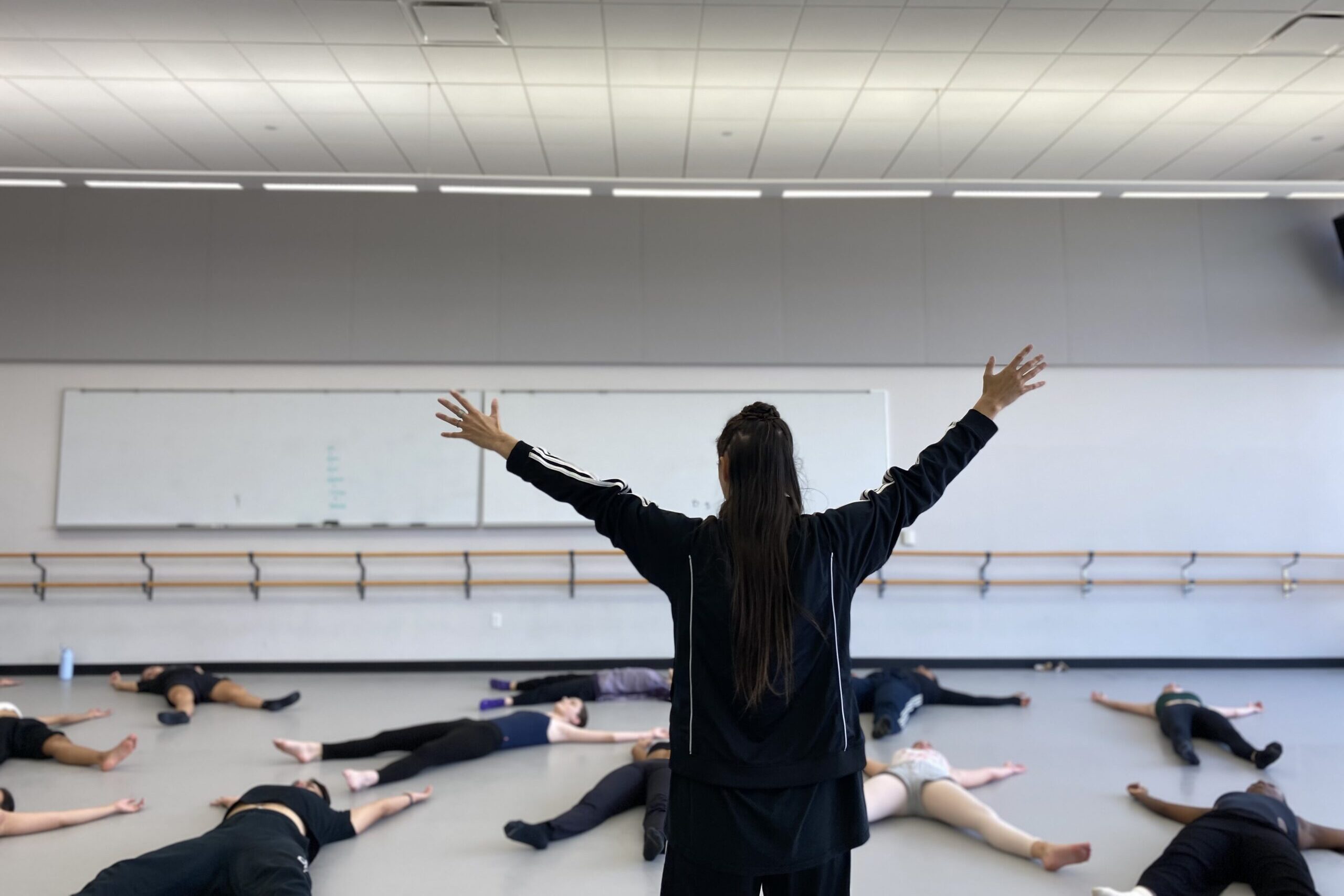
For 15 hours this past weekend the writers of thINKingDANCE were privileged to workshop with Wendy Perron, editor-in-chief of Dance Magazine. Ms. Perron, a prime example of dance artist become dance writer, danced for Trisha Brown in the 1970s before running her own company, the Wendy Perron Dance Company, from 1983 to 1994.
Our weekend began at the Annenberg Center for the Performing Arts where we gathered to watch together Compagnie Marie Chouinard. thINKingDANCE editor and project director Lisa Kraus, who danced alongside Ms. Perron in Trisha Brown’s company, introduced Perron with infectious excitement for the writing work ahead of us.
Ms. Perron’s first assignment was to write on the evening’s performance with special attention to the process of zooming in to the specifics of the dance and zooming out for context. As she spoke about things to keep in mind while writing, her values, and the qualities found in dance writing she enjoys, became clearer. For Ms. Perron, journalists have a particular kind of responsibility to their intended audience. A dance writer for a general interest publication such as a daily newspaper is obligated to inform and entertain a non-specialist readership. This obligation trumps feelings of loyalty to or responsibility for a particular dance community, something, she says, dancers and choreographers being reviewed don’t always understand. Good dance writing should reflect the expectations of a particular publication’s audience. What constitutes a satisfactory (or noteworthy, or edgy) review will be different in the pages of the New York Times and the Village Voice.
Writing for Dance Magazine is a luxury, Ms. Perron tells us, because it is clearly for a dance audience. But writing for the national dance publication of record has its own set of challenges. Out of everything that happens in diverse dance communities globally, stories have to be chosen that appeal to a wide readership across genres and geographic locations. However vibrant a particular dance community may be, contemporary dance here in Philadelphia for instance, it still might not be of much interest to aspiring Ballerinas in Salt Lake City.
Whatever the publication, Ms. Perron values writing that flows like speech with lively rhythms and simple one-syllable words. Good sentences use nouns and verbs like the vertical and horizontal axes of the dancer’s body. Too many adjectives and adverbs obscure the lines.
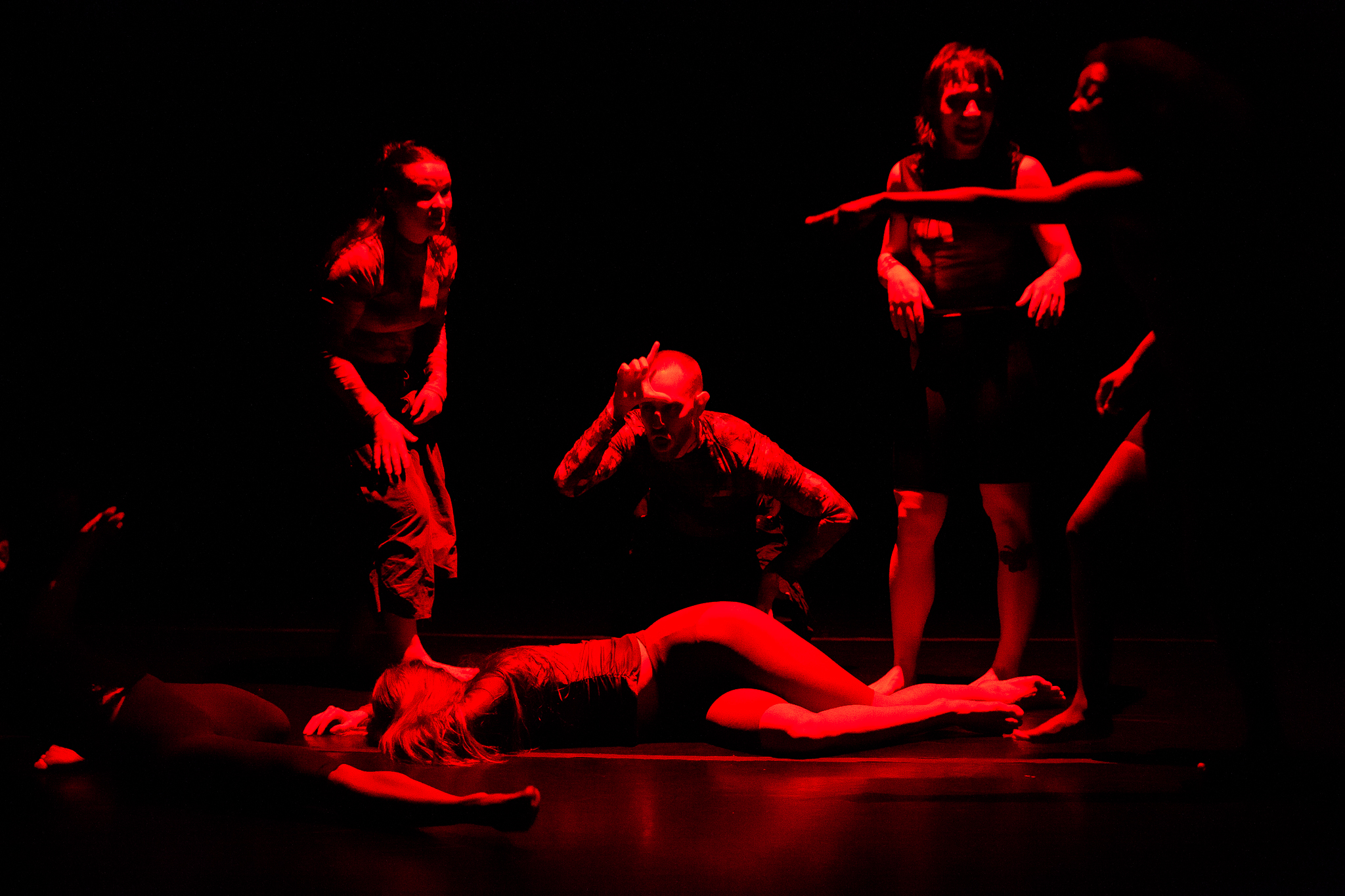
The next morning we all met at Christ Church in Old City to share our reviews of Compagnie Marie Chouinard at the start of what turned out to be a long and rewarding day. After the first few pieces, it became clear that the responses to Ms. Perron’s directives would reflect the diversity of the group. Where one reviewer saw “creatures of remarkable technique, bodies honed from foot to face, utterly committed and courageous in expression” another saw “Combat S&M Ballerina Barbie.” What one saw as “charged, complex movement” another as “ running amok with spurts of improvised, regurgitated material.”
The disparate voices and styles reflected recent questions arising in the group: Must every review accurately and objectively describe “what happened on stage”? Is there one “over-riding value” to good dance writing?
The conversation that followed, steered expertly by Ms. Perron, was both fascinating and exhausting. Some of us expressed the fear of not being able to articulate an argument…or of not having an argument at all. How do we discern those elements of a performance that are essential from those that are merely incidental? How do we balance the commitment to simplicity of language with subtlety of expression? We were reminded more than once that dance is among the hardest things to write about both because of its ephemeral nature and the multiplicity of the ways it carries meaning.
The big challenge, Ms. Perron told us, is to not reduce the experience – to, as much as possible, find the words, phrases and rhythms that reflect the power of the dance while remaining both clear and true to what you saw.
As the readings and discussions in the group went on the questions multiplied: How to express ambivalence? How are evaluative assessments backed up with evidence? And what kind of evidence? A question for many in the group involved the challenge of weighing one’s own emotional responses and authorial voice with responsibility to the artist and the reader. If reviews are to maintain a measure of objectivity, what does it mean that our impressions of the previous evening’s performance were so varied? Ms. Perron reassured us by paraphrasing Oscar Wilde: “when the critics disagree the artist is doing something right.”
For an example of the diversity of the group’s responses to Compagnie Marie Chouinard start here.