Terri Shockley, director of the Community Education Center (CEC) on Lancaster Avenue in West Philadelphia, is a cashew-complexioned woman with a short, softly bushy haircut and a warm personable smile. Her passion for community arts began in Columbus, Ohio where, as a girl, she was introduced to dance for free at a city recreation center that became a refuge where dance was her special space. Shockley was shy, but dance provided a voice for her that made people pay attention. She received her BFA from Ohio State University (OSU) in 1976. Formal dance was a new experience for her; the recreation center dance classes had focused on the freedom of movement and expression. Technique classes at OSU were challenging, but Terri was determined to persevere and she did. A serendipitous call from a friend in New York City who needed a roommate brought the adventurous Shockley to the big city.
A salient piece of advice that Terri received from an OSU professor was, “Don’t go auditioning for every dance company in town. Know what you want to do.” Heeding that advice, Shockley took classes at the Clark Center in Manhattan and at Dianne McIntyre’s Sounds in Motion studio in Harlem. In 1976, McIntyre’s studio was a hub for dancers to meet and work. Playwright Ntozake Shange took classes there, as did Jawole Willa Jo Zollar, who would change Terri’s life. Many dancers who took classes at McIntyre’s studio were not high-powered technicians; rather, they wanted to express their passion for dance in new and different ways. Zollar’s company Urban Bush Women became the place for them.
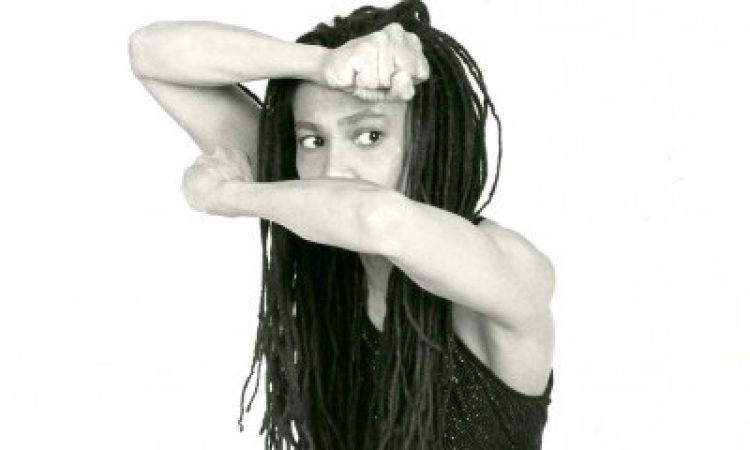
As a founding member of Urban Bush Women, Shockley spent ten years with the company, touring nationally and internationally. When asked about her favorite work in the company she replied, “Shelter!” Choreographed in 1988 as part of the evening-length Heat, Zollar’s Shelter is about the struggles of the disenfranchised. For Shockley, art is about more than making pretty dances, or even not-so-pretty dances; it is about telling stories of life that ask us to look closely, find meaning, and try to effect change. Towards the end of her time with Urban Bush Women, she met her future husband, playwright Ed Shockley, a native Philadelphian. Terri had been with Urban Bush Women for ten years (1984–1994) and she realized that it was time to move on; she and Ed decided to marry and move to Philadelphia. Their beautiful wedding, in Prospect Park, Brooklyn, was featured in the wedding section of the New York Times.
Life in Philadelphia required adjusting and it wasn’t long before Shockley found herself—as she describes it—“choreographing the two dances that were in her.” Based on the venues that these works were performed in, the “two dances” are much more substantial than Terri lets on. She choreographed and performed Fractured in the Kumquat Series in Philadelphia in 1999 and her other work, Nana Uh Uhu Does Peep Show, was performed at the Painted Bride in 1997 and 1999, based on an earlier version presented at the Thelma Hill Performing Arts Center in New York in 1993. From 1996 to 1997, Terri was theassistant choreographer for the Los Angeles and Boston national touring companies of Rent. She has also performed in works by Trina Collins, Marlies Yearby, Tiye Giraud and Billy Yalowitz. After interning at the CEC, she became program coordinator in 1999. She was surprised when, in 2001, she was asked to become executive director. With her husband’s encouragement, she accepted the position. In the midst of her creative and administrative work, Shockley’s son Jamel was born in 1998, when she was 46.
These days, life is busy with activity at the CEC, a former Quaker meetinghouse and school in Powelton Village, near Drexel and the University of Pennsylvania campuses. Shockley gets by with a little help from her friends and volunteers in running such programs as the New York Dance Exchange, Annual CEC Fall Open House and Outdoor Arts Festival, Making Dances Summer Youth Choreography and Performance Camp, Saturday Exploration in Performing Arts (SEiPA), and At the Meeting House, the CEC’s theater access and technical assistance program. She speaks with pride about the proliferation of African dance classes taught weekly at the CEC. The community aspect of African dance meshes with the mission of the CEC to nurture the creative efforts of individuals and organizations, to foster interaction between artists and the wider community, and to encourage all to explore their creativity through classes and performance opportunities.
According to its website, http://www.cecarts.org/wp/about/, the CEC was incorporated as a non-profit organization in 1973, having been founded by local community members to promote shared experiences and nurture fellowship among its varied neighborhoods across cultural and economic differences. The Etc. Performance Series, initiated by Charles Tyson, is an important venue for dance artists to present choreography. Through its New Edge Resident Artist Performance Series, now in its twenty-seventh season, the CEC has presented many of Philadelphia’s best-known artists, including Tania Isaac, Jumatatu Poe, Charles Anderson, Kimmika Williams-Witherpoon, Jennifer Morley, Nora Gibson, Leah Stein, Shavon Norris, and Jaamil Kosoko.
Shockley is the quintessential arts administrator, constantly multi-tasking and advocating for the arts. She doesn’t mince words when she describes the job’s difficulties, especially in these economic times. Still, she remains convinced that the arts must be front and center in Philadelphia’s neighborhoods and the lives of its citizens. Shockley is excited about an upcoming project, “DanceAfrica.” Started in 1977 under the artistic direction of Baba Chuck Davis, “DanceAfrica” will celebrate its thirty-fifth anniversary at the Brooklyn Academy of Music on Memorial Day weekend. Several “DanceAfrica” festivals have been held in other cities, including Atlanta, Chicago, and Los Angeles, and now “DanceAfrica Philadelphia” will take place in October 2013. Terri has secured a matching grant from the John S. and James L. Knight Foundation in the first round of the Knight Arts Challenge Philadelphia. With the help of her “DanceAfrica” committee, she is working on securing additional funds.
This festival in many ways expresses Terri’s belief in the power of community, in national and global healing through creative expression, and in making contributions to the larger arts arena by encouraging arts on a neighborhood level. Shockley’s background as a professional dancer in a renowned company and her childhood experiences dancing at a city recreation center in Columbus, Ohio, have given her a strong foundation for arts advocacy. Shockley can be reached at cec@cecarts.org.
Photo: Christopher Gabello Iowres