My nephew is fourteen and a rising tap star. I’ve watched him pound out rhythms on slabs of wood in the yard, on bathroom tiles while brushing his teeth, and in innumerable theaters and dance studios. Over the years, he has tested, pushed, and broken the boundaries I recall from my own childhood tap career, mostly associated with sequins, forced smiles, and a performative rigidity that left little room for authentic expression.
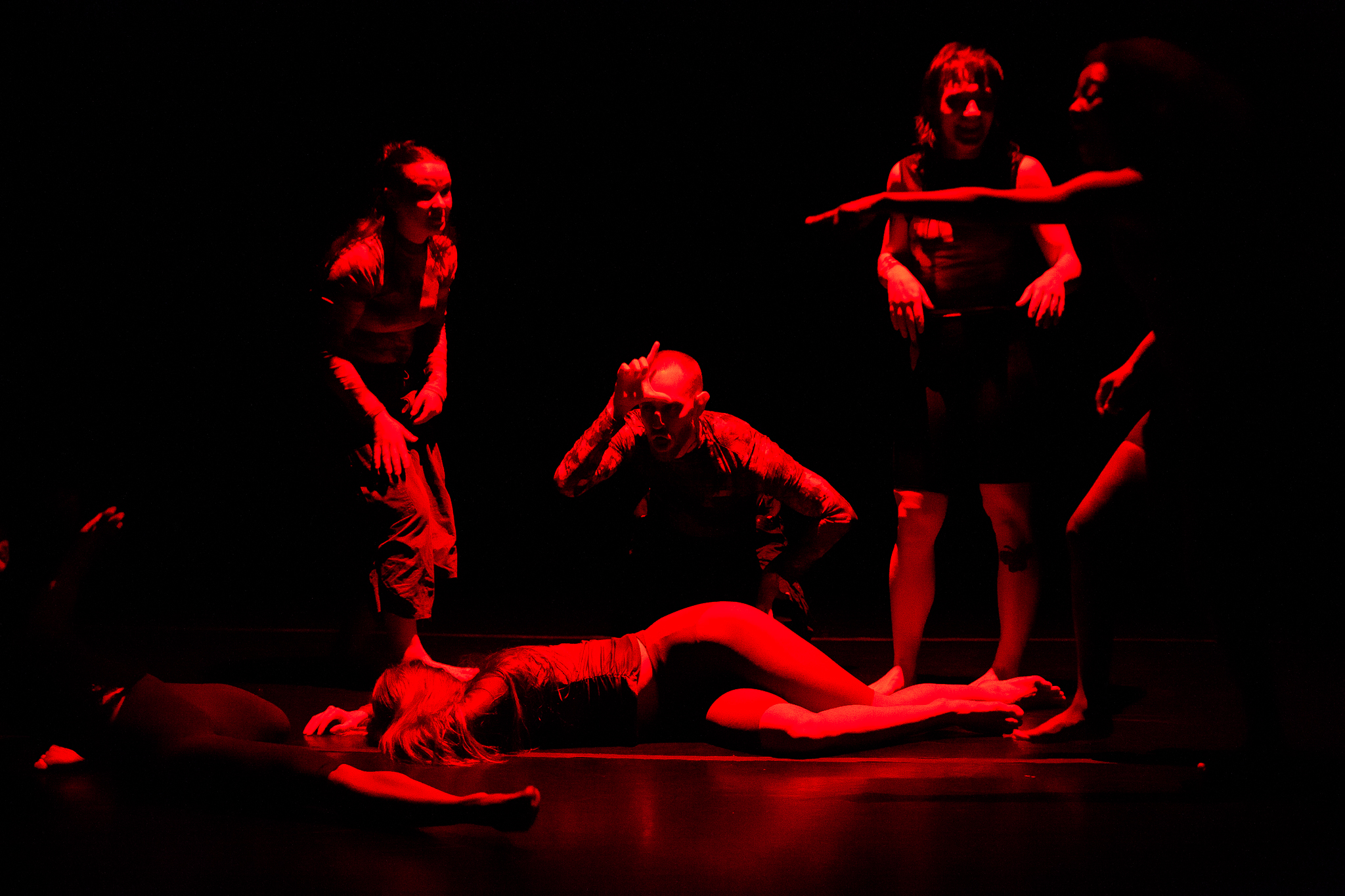
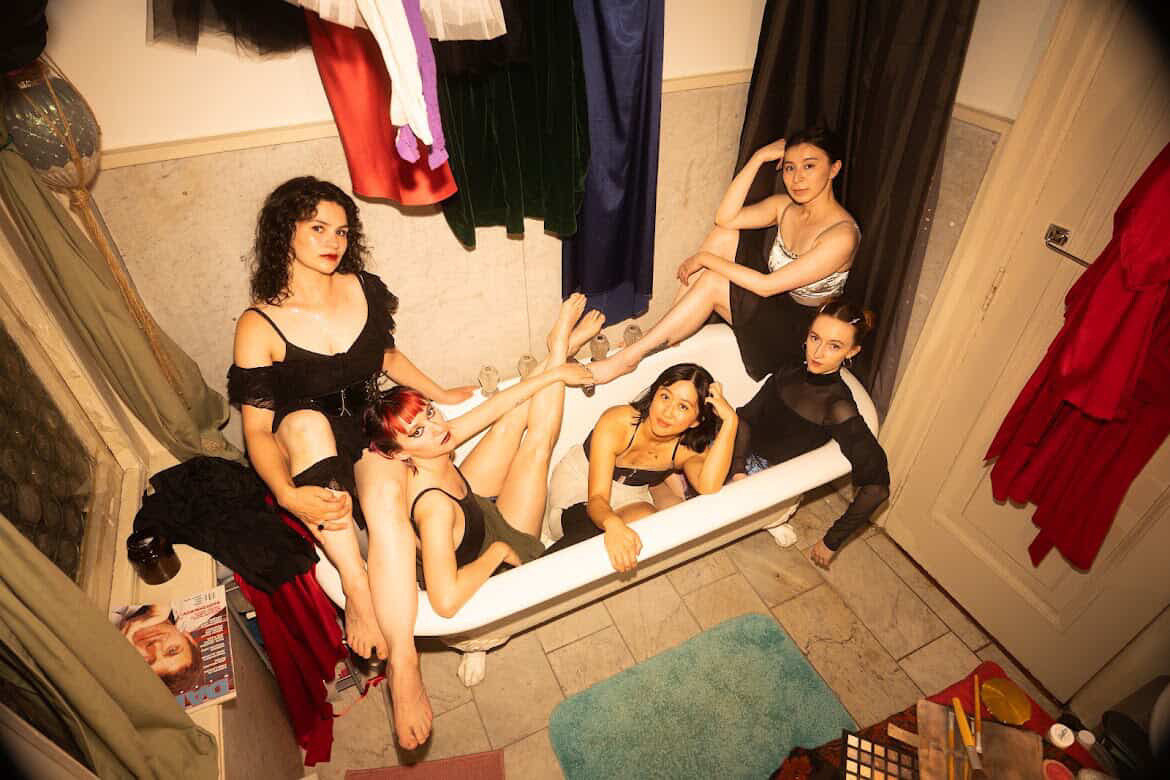
I thought about this at the Lady Hoofers’ Holiday Concert at the Performance Garage last Friday night. Many pieces in the line-up displayed the vigorous innovation that I see in my nephew’s performances, that melding of dancer and choreography into something unexpected, new. For example, the Lady Hoofers Youth Ensemble performed “March of the Toy Soldiers” with poise and fiery precision. In “Overture” and “Dance of the Floradores,” the Lady Hoofers drew the audience enticingly into the jazz allure of black dresses, men’s button-downs, and fancy footwork. In “Reinvention,” a ten-minute piece shown as a film, dancers created rhythms with bare feet and household objects; their on-stage banter seemed a bit contrived, but overall the piece felt lively and organic.
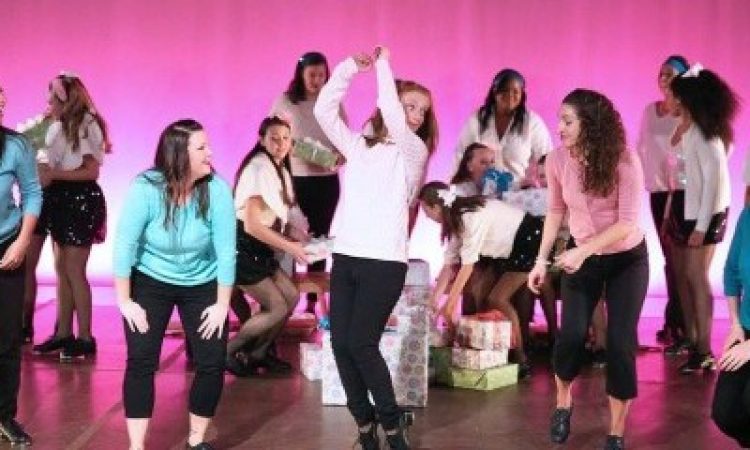
But other pieces, despite striking visuals and dancers’ technical prowess, failed to yield an authentic sense of creation. “The Most Wonderful Time of the Year” featured rapid-fire footwork, but was undercut by an abundance of pastel cardigans, pearl necklaces, and nearly maniacal smiles; by the end, dancers seemed trapped within the confines of a forcibly happy housewife existence. In “Waltz of the Snowflakes,” dancers in white scarves and sweaters tossed snowballs back and forth, appearing intent on making this exercise look much more entertaining than it was. In both cases, a lack of real embodiment of the piece left the outward trappings—the outfits, the music, the props—as the most memorable parts of the performance, the dancers seemingly existing only to execute a predetermined set of movements in a style passed down from former generations.
The feminized, made-to-please aesthetic conjured up by those Lady Hoofers’ performances became painfully vivid during “Man in the Bag” and “Marshmallow World,” both of which featured members of the Youth Ensemble. First, Deedee Mann, a talented vocalist, sang to a bench full of young girls, whose eyes wandered almost pleadingly toward the audience and whose jaws seemed glued into artificial smiles. Then, holding marshmallows on sticks, the dancers executed a polished choreography before returning to the bench to rock from side to side, freezing at an uncomfortable incline and waiting with grimaces for the next piece to begin.
To engage an audience is a process, of course, and the discomfort of these last two pieces may well derive from the fact that Youth Ensemble dancers are still fine-tuning that art. Still, the proximity of these pieces to those that came before them made for an intermission during which I felt slightly shell-shocked, like I’d dived sixty years into the past and found it to be an even more viscerally uncomfortable place for women than I had imagined. Maybe this was the point? But there were no feminist plot twists, no moments of righteous rebellion. The most revolutionary moment I could identify (and this did not happen until the second act) was two women throwing snowballs impishly at the audience, instead of at each other.
Of course, feminism doesn’t have to be the point, I consoled myself as the second act began. It must be a question of taste, a couple of fashion choices I wouldn’t have made.
But when a vintage dance troupe called the Old City Sweethearts took the stage for a guest appearance, I found myself reconsidering. Like the Lady Hoofers, these women beamed at the audience, and bounced and paraded in a way that could only be described as “cute”—but they did so with palpable, indisputable joy. Their charm was awkward and impertinent; they were conscious of the era they were embodying, and had chosen to embody it with flair. That sassy, arms-flung-out choice invited the audience to lean into their performance, delighted, rather than leaning away in wincing recognition.
The Lady Hoofers’ final piece of the night, “The Nutcracker Suite,” was a winner, featuring every dancer and filling the stage with a round of relatively simple steps performed in perfect precision—the kind of feat that looks easy and requires hours of unrelenting practice to make it appear so. This delivery bodes well for the Lady Hoofers’ all-tap “Nutcracker,” currently in the works.
Still, I left the show with a residual sense of unease. My nephew has donned overalls, bowler hats, and berets for tap performances. He’s danced in rigid formations; he’s performed decades-old choreography with no room for improvisation. But none of these roles have seemed large or permanent enough to stifle his own artistry. I hope that the Lady Hoofers have similarly expansive fields in which to frolic, that they are supported in finding those choreographies, musical selections, and decades that ignite their own sense of freedom and joy. And I hope the young women in the Lady Hoofers’ Youth Ensemble are encouraged toward similar versatility of roles and aesthetics, empowered to explore their artistic identities within a genre that supports their self-expression.
The Lady Hoofers Holiday Concert, The Lady Hoofers Tap Ensemble, Performance Garage, December 4-5. http://www.ladyhoofers.org/