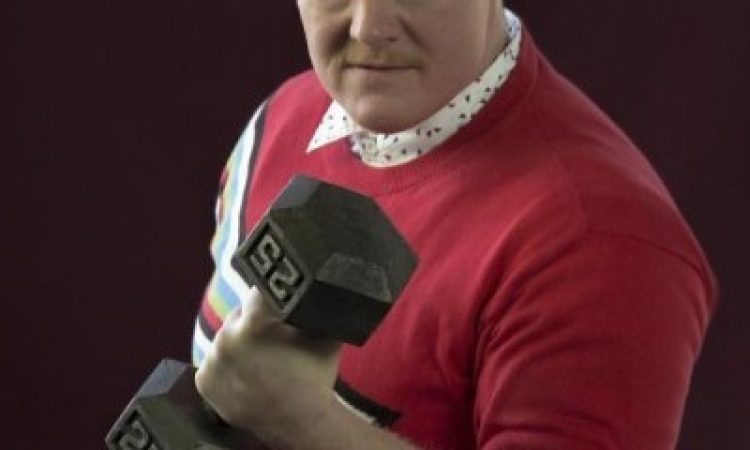
Becca has a magnetism naturally suited for an audience. Flexible in expression, solid in stature, Becca can hold their own. It’s no wonder friends encouraged them to do a solo show.
“Everyone kept saying I should do a solo show and that was my worst nightmare,” Becca says, and chuckles. Good solo shows are hard to come by, and Becca Blackwell – as an artist who has received considerable and growing attention in the last couple years – at first did not want to take a nose dive into the potentially stodgy world of solo-ing. But digging to unearth their resistance had great appeal – especially for a performer who has come to learn that resistance is the artist’s greatest ally. This core value – of seeing opportunity in resistance, or confinement, or pain – resonated most profoundly in Blackwell’s performance, as they traversed the rocky terrain of personal exposure.
The show is called They, Themself, and Schmerm, (written and performed by Blackwell), and recently finished a short run at Abrons Art Center. The title is a spin off of the Corey Haim 1989 vanity doc Me, Myself, and I – a 36 minute video of Haim’s desperate attempt to convince the world that life is grand and he’s okay. “I looked at him and saw all this pain,” Becca recalls, reflecting on their initial reaction. They found the video on YouTube during a rabbit hole of interneting, and decided to use it as a soft template for their show. “I recognized things in him,” Becca says, namely that he was a survivor of sexual abuse – a kind of recognition akin to being able to “smell a queer person in the room.” Queerness, surviving sexual abuse, being adopted – there is a separate kind of antennae reserved for those who can claim and spot these titles, and Blackwell’s is finely tuned.
Read the full article at Culturebot. Originally published March 22, 2016.
Editor’s note: thINKing DANCE is excited to be sharing articles with our friends at Culturebot. Please let us know how you are enjoying the conversation.
By Alice Pencavel