Lavise Lowery is dancing in the living room at The Maas House. I’m about halfway through the performance of Two Stories. I have seen Amanda Falivene-Rocco’s half of the duet in the upstairs bedroom and have transitioned downstairs to a folding chair in the kitchen for Lowery’s side. (The first two parts feature the same duet, the same period of time, though the audience is only privy to one side of the story at a time. The third and final section will have us retire to the garden to view the final series of vignettes as a whole.)
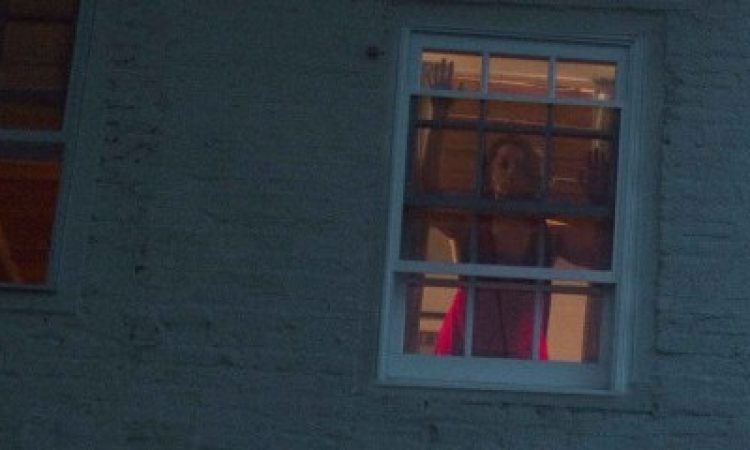
I am confused at this point, reader. The program describes the choreography as “pedestrian, meant to complement the living nature of the space,” yet also “most closely related to pure lyrical, wherein the movement is intimately connected to the lyrics and emotionality of the music.” Do these coexist synonymously? I see Falivene-Rocco, in the upstairs bedroom, roll off the mattress and take measured, deliberate walks to the window to thrust aside the curtains as if they, instead, are her scornful lover. She clutches her heart while reaching after Lowery who has disappeared through the door after appearing to tango with her, but only briefly, maybe just two or three steps. Mumford and Sons swells. Falivene-Rocco hurls herself onto the bed and pounds on the wall above the frame in frustration. In terms of emotional depth or nuance, I’m watching the equivalent of corn flakes: bland, simple, spoon-fed.
I find the moments of greatest authenticity come when one dancer flees the room to continue the duet in the part we will see later. It’s the dead air, the performance-television static, and it’s real; the parts we don’t see, the in between bits where nothing really happens and you’re forced to pay attention for a moment.
Clarification: I do not mean to imply that the dancing was best left unviewed. Each time Falivene-Rocco threw her head back, arms searching for her lost lover/some greater strength to carry on/her scarf, her walnut-sized eyes fell into one another and crossed ever so slightly. While I found the choreography too thickly applied, I enjoyed small moments of genuineness in the dancers’ natural idiosyncrasies.
Ultimately, Two Stories is one-dimensional.
Two Stories, Jillian Glace, The Maas Building, September 9th and 10th at 7:30 and 9:30pm. http://fringearts.com/event/two-stories-3/