Olive Prince’s Silencing the Tides takes you about as far from keeping quiet as one can get. The performance sneaks to a start as a woman stands in front of a decorative wall collage, rearranging its parts, altering the overall shape. She is seen and not seen; easily overlooked. Slowly, her movements become increasingly patterned: sit, scoot back, observe handiwork, begin again.
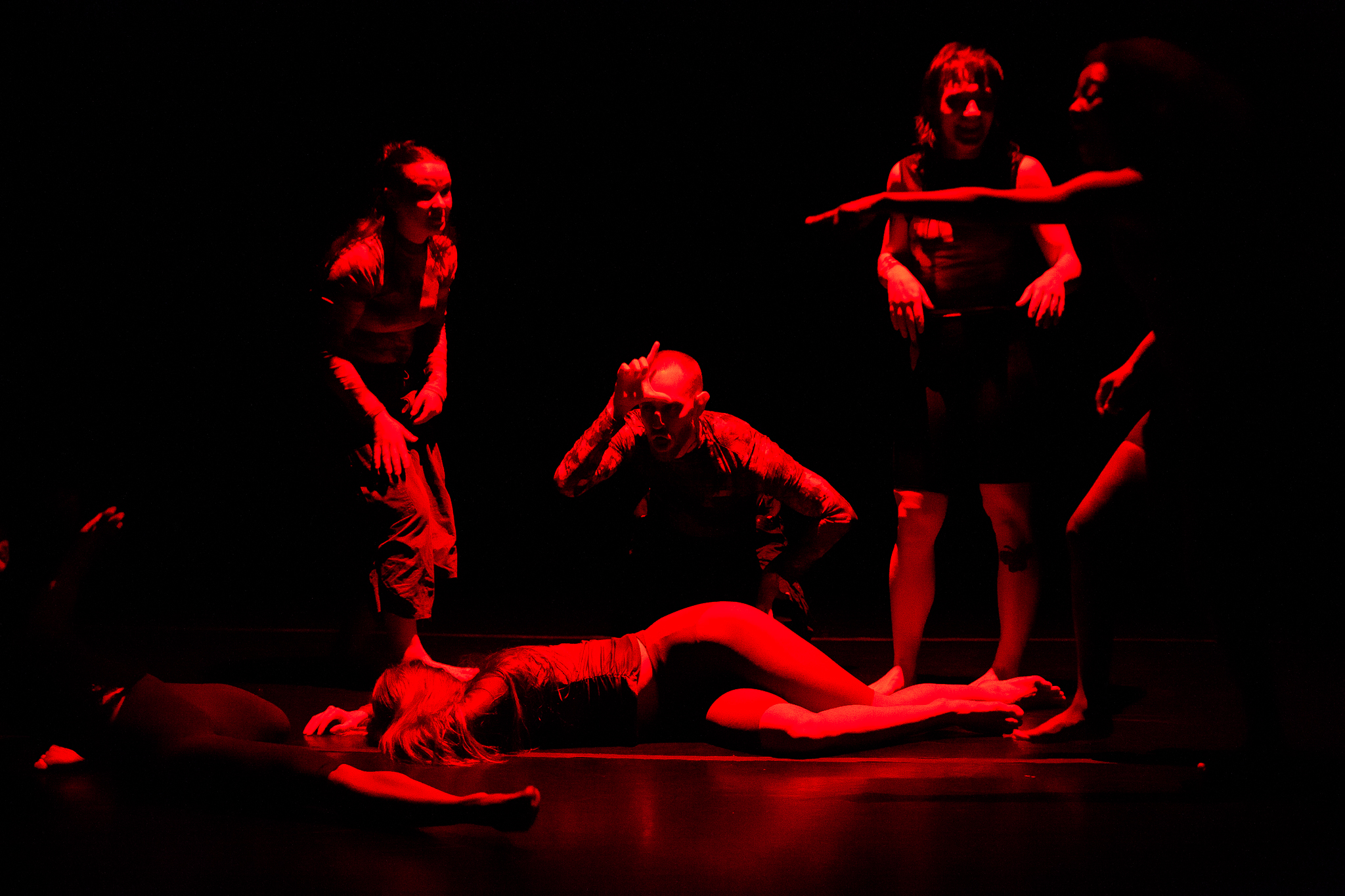
Six women gather on stage in a series of constantly changing vignettes, where individual and shared distance interplay; we are at once able to see the separate components and the totality of an elusive, undefinable, quotidian experience. They cross the space as weight-sharing, monolithic shape-shifting sculptures that then chip away to reveal what’s under the surface. Fragments of each dancer’s personal universe repeat, then combine, creating a turbine-like, ever-looping, tantric dance.
Silencing the Tides mimics the power, malleability, and willful nature of the sea. Like the calm before the storm, slow crawls and pedestrian movements build until the women are tossed, pushed, or thrown across stage by an invisible, yet greatly-felt wind. They purposefully roughhouse, see-sawing between preparing for battle and delightful abandon in play. Each one has something particular in mind and body, all fodder for the mix. Separate, yet united; independent, yet fiercely collaborative, these women celebrate feminine collectivism in all its aspects. Prince’s signature movement style—a juxtaposition of sharp, contained isolations and luscious, space-encompassing floor and airborne stretches—pushes us toward hidden meanings.
The piece’s sculptural quality suggests a mobile stability often identified as a feminine characteristic. Visual artist Carrie Powell’s hanging installation reflects this trait: a sort of immortalized, well-ordered array of laundry—mostly shirts—hovers above the performance space, a constant reminder of life as many women know it. Routine becomes habit becomes ritual and it’s a done deal: out of frustration, impatience, and overwhelmedness, all mixed with love, devotion, duty and desire, these women adamantly search the layers between the lines. Those tiny spaces where forgotten parts of women lie, impatiently waiting for reactivation, represent the raw material of this piece, Prince’s most recent dance work. Her companions, all strong, well-rounded performers, fortify the emotional depth of the piece, making Silencing the Tides especially fulfilling to watch.
Silencing the Tides, Olive Prince Dance, Ballroom Philadelphia, September 16-17, 2017. http://fringearts.com/2015/04/28/olive-prince-dance-shows-new-work-this-weekend/