ON THE ROCKS repeatedly uses “queer” as a descriptor for their work, which I have come to understand as a spectrum of sexuality and gender, encompassing anyone who does not relate to a single identifier like “bisexual” or “cisgender.” WOLFCRUSH tracked a group of high school students exploring their sexualities where pressures to be heteronormative were sizable. In the midst of an unusual murder mystery, the kids—Huck, Beecher, Kyle, and Junyce—encountered awkward hand jobs, sexy leather, and werewolves.
Immediately, gender expectations were on display. Junyce, a badass transfer to White Coon County, met Kyle, her student tour guide. Junyce wrongly presumed Kyle to be male because of her name. We heard people warn Kyle about Junyce: “She’s a dyke. … People might think you’re together.” Kyle’s boyfriend reminded her, “You’re all mine.” The LGBTQ-friendly audience guided my response, and it was not with sounds of approval.
Junyce disclosed to Kyle that there’s “something inside of me and I can’t control it.” She was referring to her desire for “raw, human meat.” To satisfy these cravings without harming others, she resorted to consuming chunks of her own flesh. We learned there is a deeper meaning to what’s inside.
Highlighting issues like sexual assault and eating disorders contributed to the complexity of the characters. Experiences that impact our sexuality were carried forward into future endeavors. For the purpose of this show, however, the jumble of cataclysmic material that was acknowledged, then abandoned, felt novice. I was distracted by irrelevant details.
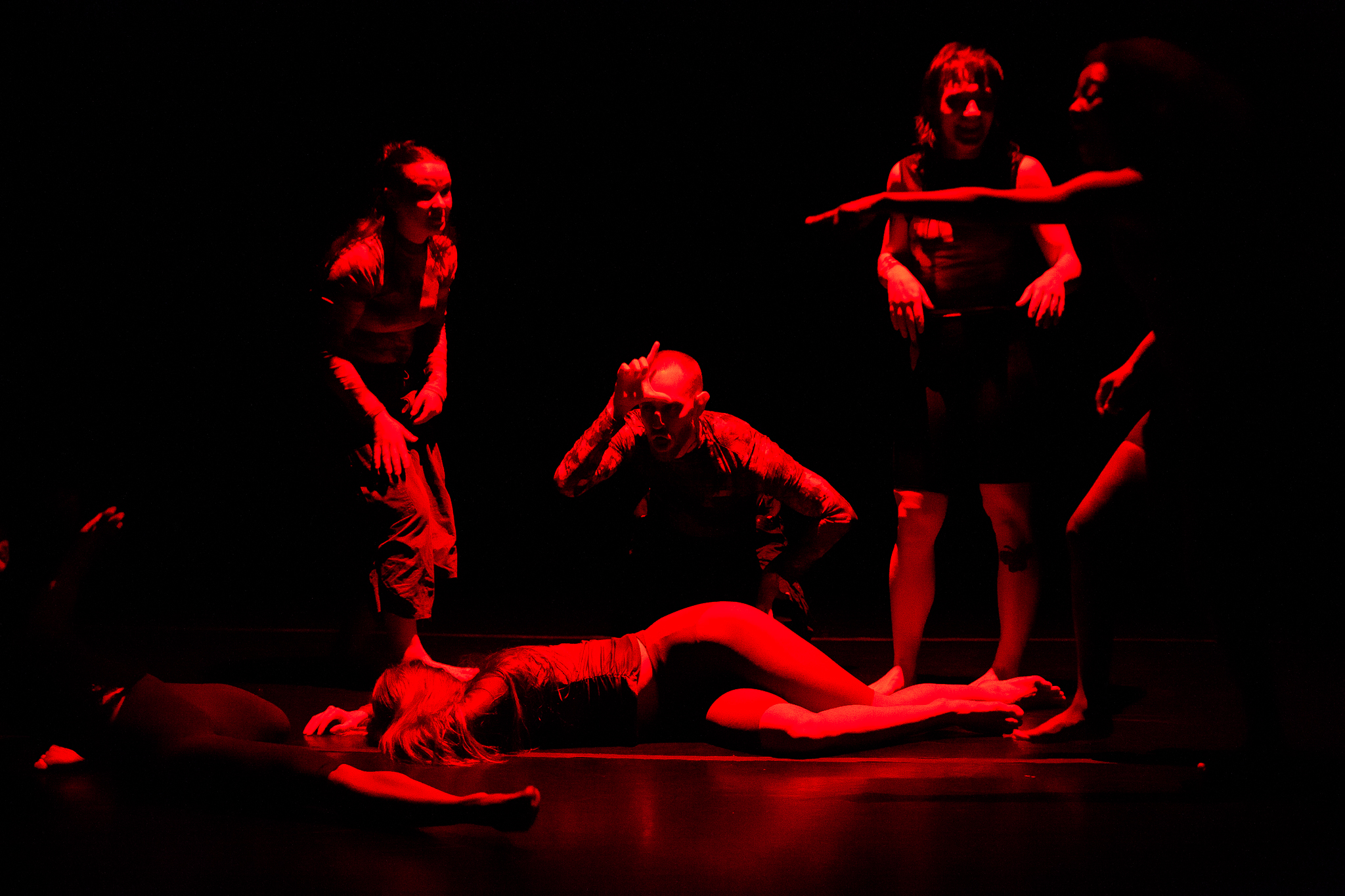
Beecher and Huck engaged in role play as practice for an anticipated romantic exchange. Huck overplayed stereotypical female behaviors, puckering his lips and sticking out his hips. He urged Beecher to “Pretend I’m shy. … Make the first move. … Keep her wet and eager.” The audience howled in disgust.
Huck used a hypothetical situation to hide behind his sexuality. Fearful of being stigmatized, he avoided vulnerability through defensiveness. He spoke to Principal Roman (an overweight, Caucasian cocaine addict who murdered his wife) about being gay, to which Roman replied, “You’re trying to tell me you’re a faggot?” Gun pointed at him, Huck recoiled, denying his confession. Emphatically, the principal said, “Good.” Silence. That word lingered in the air, the weight of its judgment ringing in my ears. Straight is good, which means anything else is bad. I joined in the condemning howls this time.
When confronted with his feelings, Huck killed Beecher in panic, then immediately collapsed in tears over the dead body. In the final scene, we find the other leads facing their truths, making choices about the exposure of their sexualities. Kyle transformed into a werewolf, aggressively engaging in intercourse with Junyce. She was unrestrained in her urge to be with another woman. Her transformation into a werewolf—a creature misunderstood and regarded with terror—marked bittersweet self-acceptance.
In one relationship there was tragedy; in the other, pleasurable surrender. For both there was release, but living freely brings new hindrances. Embracing the beast inside, accepting such a transformation, defies societal norms. Yet, in embracing their full nature, Kyle and Junyce both welcome the scarlet letter of openly non-hetero sexuality. This provoked in me an awareness of the tension between maintaining a secret life behind a façade of conformity versus living true to one’s nature and the price these characters pay for their choice.
WOLFCRUSH, ON THE ROCKS , Vox Populi, September 13, 15-17, 19-22, ontherocksphilly.com