I’m in a meadow; a trail in the grass guides me to the water. Philly lingers in the distance, but here it’s quiet. I settle in to witness Ani/MalayaWorks’ Fringe Festival offering, Nanay, at Bartram’s Garden, and this place embraces me.
Nanay channels ancestral memories, voicing maternal stories as essential to Filipino-American migration histories. Director Annielille “Ani” Gavino* performs with her daughter Malaya Ulan and three Filipina/x collaborators, Isabella Mojares, Sevon Wright, and E Fajardo Canlas, who chart their matrilineal stories onto their bodies and into the grass.
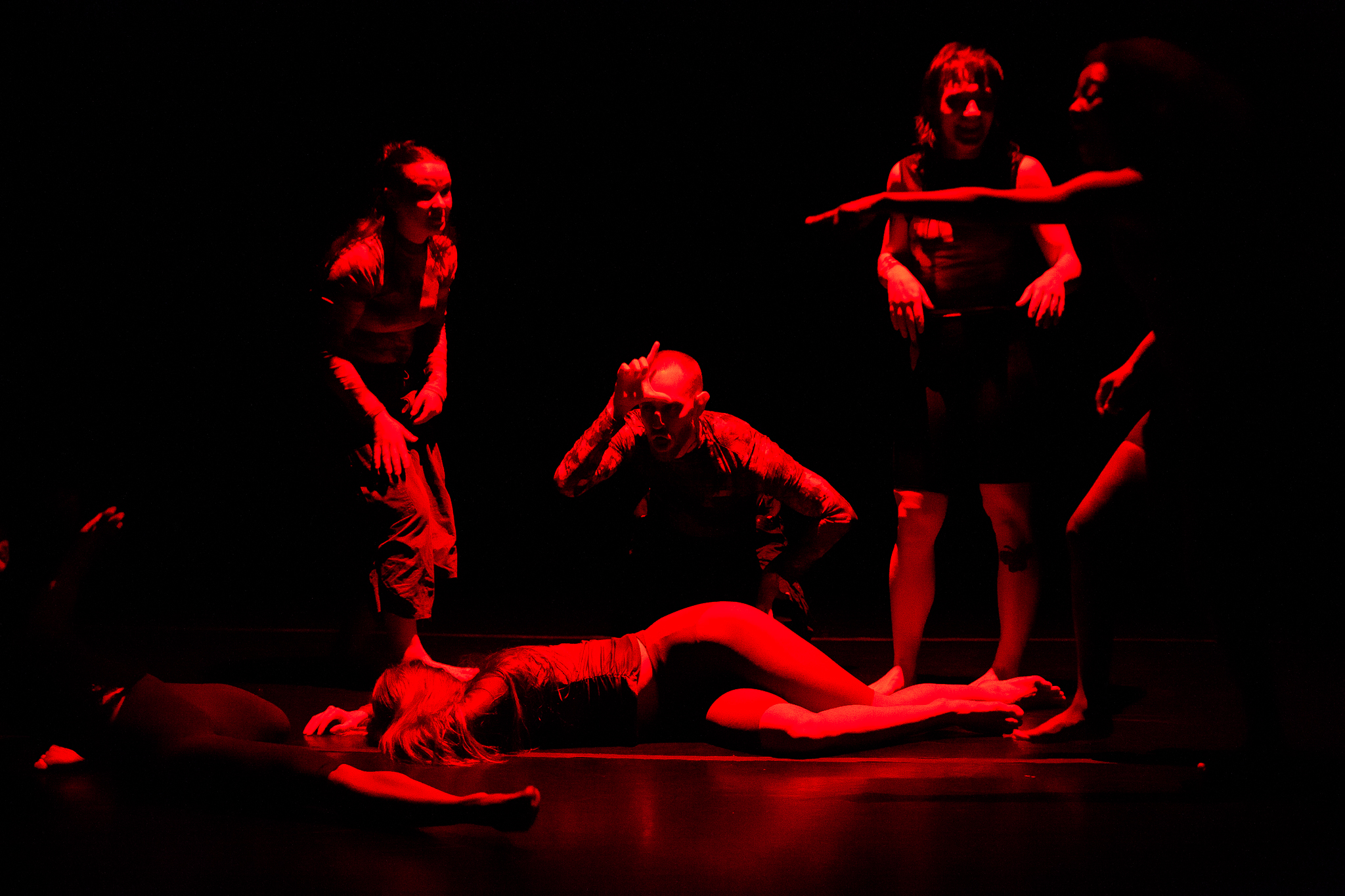
Gavino steps into a kiddie pool and pours cupfulls of water onto her shoulders. She sings in Tagalog, and I feel language wash over me. She presses her hands past her widened legs, spreading her arms in a silent scream. It’s a quiet, laborious birth. A tense finger points to her forehead, chest, shoulder, shoulder. Her resistance is visible, as if an outside hand forces her to complete the branding of the cross. Her finger never reaches her face, and she yells, “Oh God, I hope this isn’t my path; this place is a never ending trap to wrath.”
Nanay layers movement with anecdotal spoken word and archival news audio, carefully crafted into a poignant soundscape by Paul Baisley. The audio often shouts violent and oppressive messages to the dancers: “Move on. Get over it. Toughen up. Moving on…” These messages are pushed onto them, and they resist, bound tension in their muscles, faces yearning for softness.
Yet, we also witness their search for healing. Gavino’s process included creative writing exercises; some are published in Nanay’s program, and some are published in her chapbook, De(scribing), that will be launched in the coming weeks. The audience is guided into one of these exercises: “Find a photo in your camera roll that makes you think of love, forgiveness, family, happiness, care.” (All words are first named in Tagalog.) We free-write: “I felt held when…”
Mother and daughter mirror each other, catching fluid arm gestures that remind me of waves. We hear, “….I love you…. My name is….” It’s a mother teaching Tagalog to her English-speaking daughter. Gavino presents her pointer finger; this time we hear a stern, untranslated, stream of words. Daughter replies, “I don’t understand you. You never taught me the language…”
They lean their heads together. I see them see each other, smile, and they end together in an embrace.
This is what it feels like to be held by a Nanay.
*Annielille “Ani” Gavino is a writer and editor with thINKingDANCE.
Nanay, Ani/MalayaWorks Dance, Bartram Gardens Community Boathouse, Fringe Festival 2021, Sept. 17-19.