A short-skirted maid, played by Frank Leone, welcomes me into choreographer Gunnar Montana’s Motel Montana, cleaning with a feather duster, posing on a bed for an audience member, and drawing less than subtle attention to their bare-bottom. An eclectic array of motel visitors come in and out throughout the night from set piece motel room doors. Dancers costumed in black body suits slinked in like shadows of haunting memories, or perhaps instead came for kinky fun. The audience cheers when Montana himself struts out of a different door in high heeled, thigh high, red boots.
I wonder what happens behind these doors. A narrative of narratives, an infinite vortex of stories, exists beyond each one. They hold unique histories, except for the commonality of location in the motel. I feel voyeuristic, excitable, and free.
This is not my first Gunnar Montana production and won’t be my last. I anticipate unorthodox partner work and unfathomably athletic choreography, fulfilled by impeccable exactness. In a duet, one man turns into another with such direct power that I cringe, awaiting collision. Instead, he meets the other’s skin gently, sliding down through his grip, direct and tender. It is stunning, attacked with gargantuan force and slippery grace.
What I find myself especially captivated by, however, are the quieter moments. A large wooden set piece blossoms, each of the four panels stretching to the ground, unearthing Mika Romantic among greenery. Seemingly larger than life, wrapped in leopard print, she removes her hat, gloves, and skirt. Her hips sensually gyre, like a bowl circulating water; her face is proud. She is statuesque, erect, intentious, basing in almost-nudity. Four male dancers revolve around her, mortalized by their casual clothes and slow marching on the floor below her. This jungle goddess replaces her hat, reclaiming her place like the sun centered in the solar system.
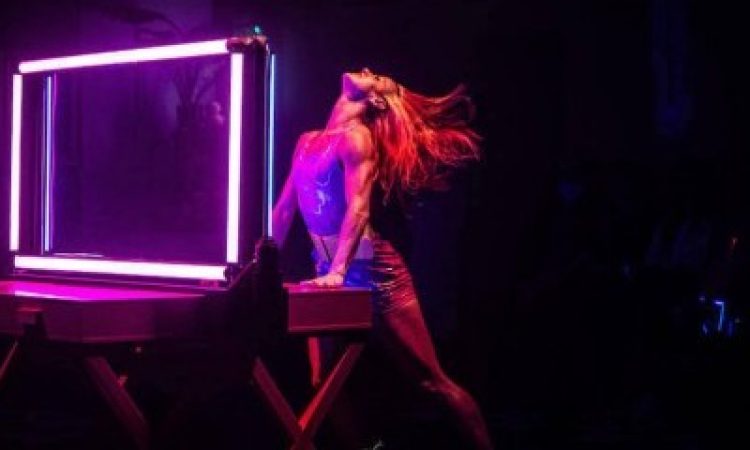
In another scene, a man in combat gear and a topless woman face each other on opposing sides of a vanity mirror. The man exposes red lingerie under the fatigues and the woman begins lifting weights. They unknowingly peer at each other through the mirror as they gesture in synchrony. They share a similar story of struggle with gender identity, though beyond the privacy of their rooms, their connection remains secret.
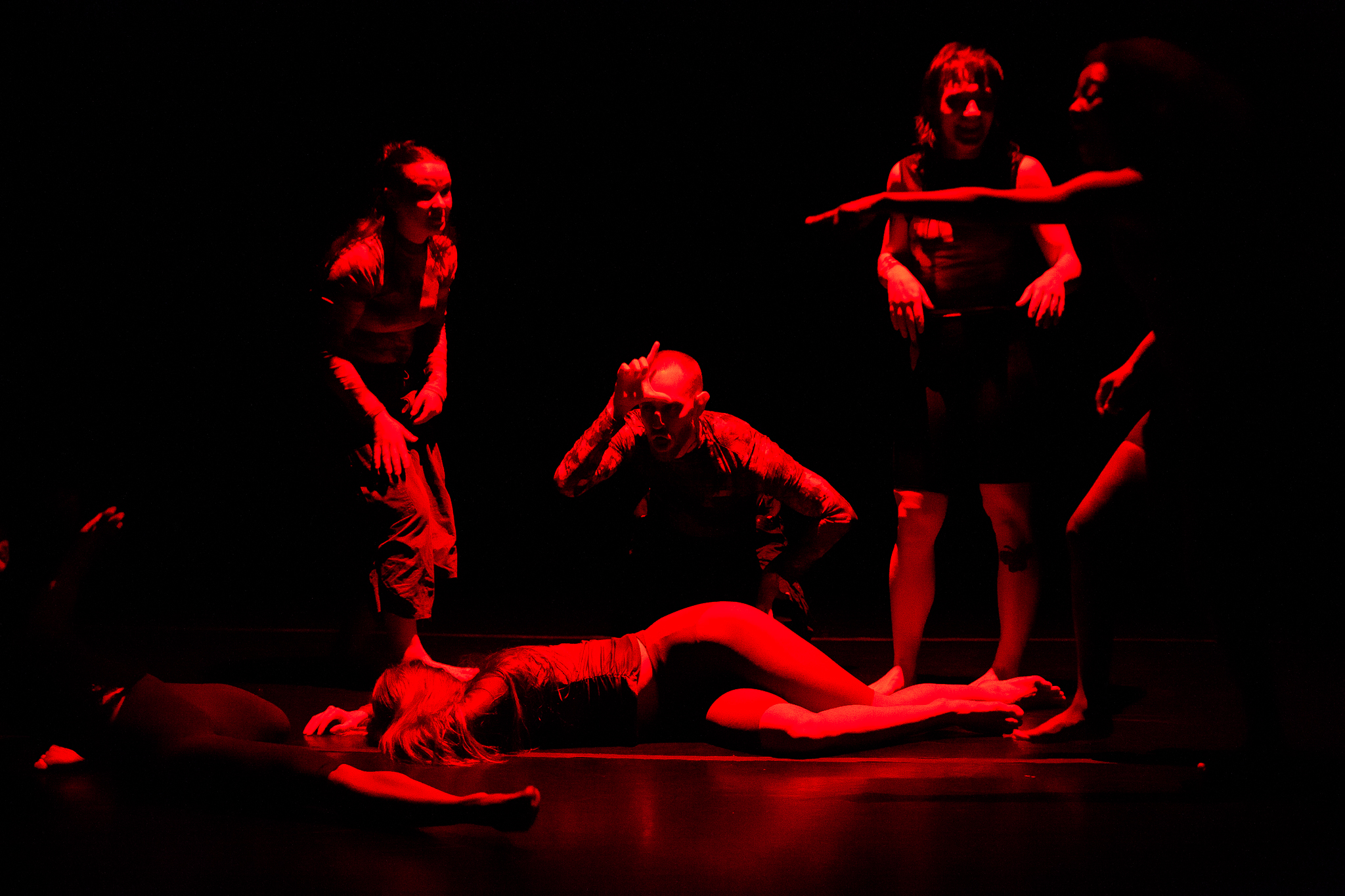
The rooms of Motel Montana house fear, celebration, acceptance, and exploration. A straight man encounters a drag queen. A voluptuous bombshell flaunts her curves. The presumed traditional gender roles of the maid are challenged. A trio of nuns rip the pages of bibles before curiously making out in a bathtub. Some of these moments occur in solitude, others in companionship. Four men have oral sex next to a public urinal while others have intimacy alone together, like the man and woman who mirror each other.
I leave the performance walking on the floor where the dancers thrived only moments prior. I tread through piles of glitter, torn pages, and petals. The floor reveals markings created by moving bodies, shimmering but lifeless remnants of the past.
When I get home, I notice wisps of feathers from the show floating around me, reminders of my own history and its intersection with someone else’s.
Motel Montana, Gunnar Montana Productions, The Latvian Society, Fringe Festival, Sept. 9-Oct. 30.