Pauline Koner and Anna Sokolow are two of the great modern dance choreographers of the twentieth century. Unfortunately, their work is shown infrequently these days, so it was a welcome gift to see Envisions, the joint presentation of Dancefusion and the Sokolow Theater/Dance Ensemble. These two companies joined forces to present several archival works during the Philadelphia Fringe Festival – bringing archival dances to a festival dominated by new work.
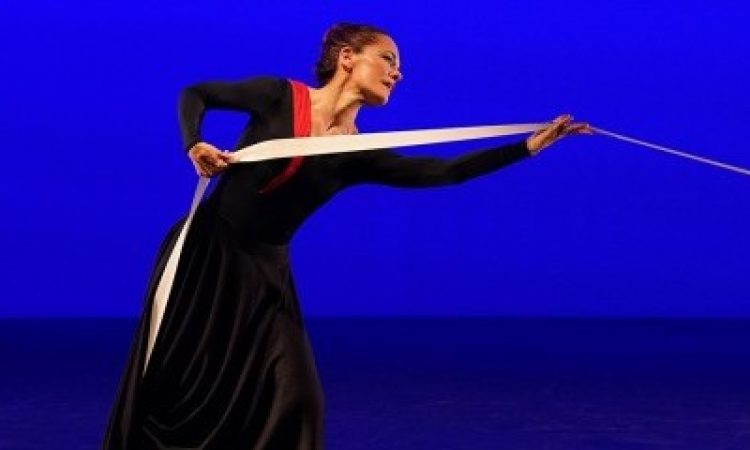
Directed by Gwendolyn Bye, Dancefusion is the Philadelphia area’s premier presenter of classic modern dance and has been fortunate to join with Evelyn Shepard, a protégé of Koner (1912-2001), who has expertly reconstructed and directed Koner dances for them. Janet Pilla Marini’s riveting rendition of The Last Farewell , is a signature solo among four forming The Farewell (1962) that Koner created in homage to her mentor, Doris Humphrey, and Marini’s performance reveals the sustaining power of this work. The mournful sound of Mahler’s last song from The Song of the Earth surrounds the audience plunging us into a wistful world. Marini quietly enters cloaked in an elegant garment of flowing black revealing a slash of red beneath (an original design of Koner’s). She engages with her past and future selves as she plies a long belt of cloth set diagonally across the stage—embracing it while entwined and restrained by it. She tests its tension and resilience and gazes into its future, all while maintaining a continuity with its existential threads.
The emotional intensity of this spare but rich embodiment by Marini of a psychological state of self-reflection and loss stood in contrast to the animated, stylized gestural renderings of Koner’s Concertino (1955). Recreating the feel of a Renaissance court with a Lady (Kate Lombard) and Ladies in Waiting (Julie Spooner, Gabrielle Wright, Alexandra Roberts and Marini), the dancers arced and flowed with regal precision and musicality, interspersed with abrupt, angular arm gestures that suggested ancient roots in Egypt or Greece.
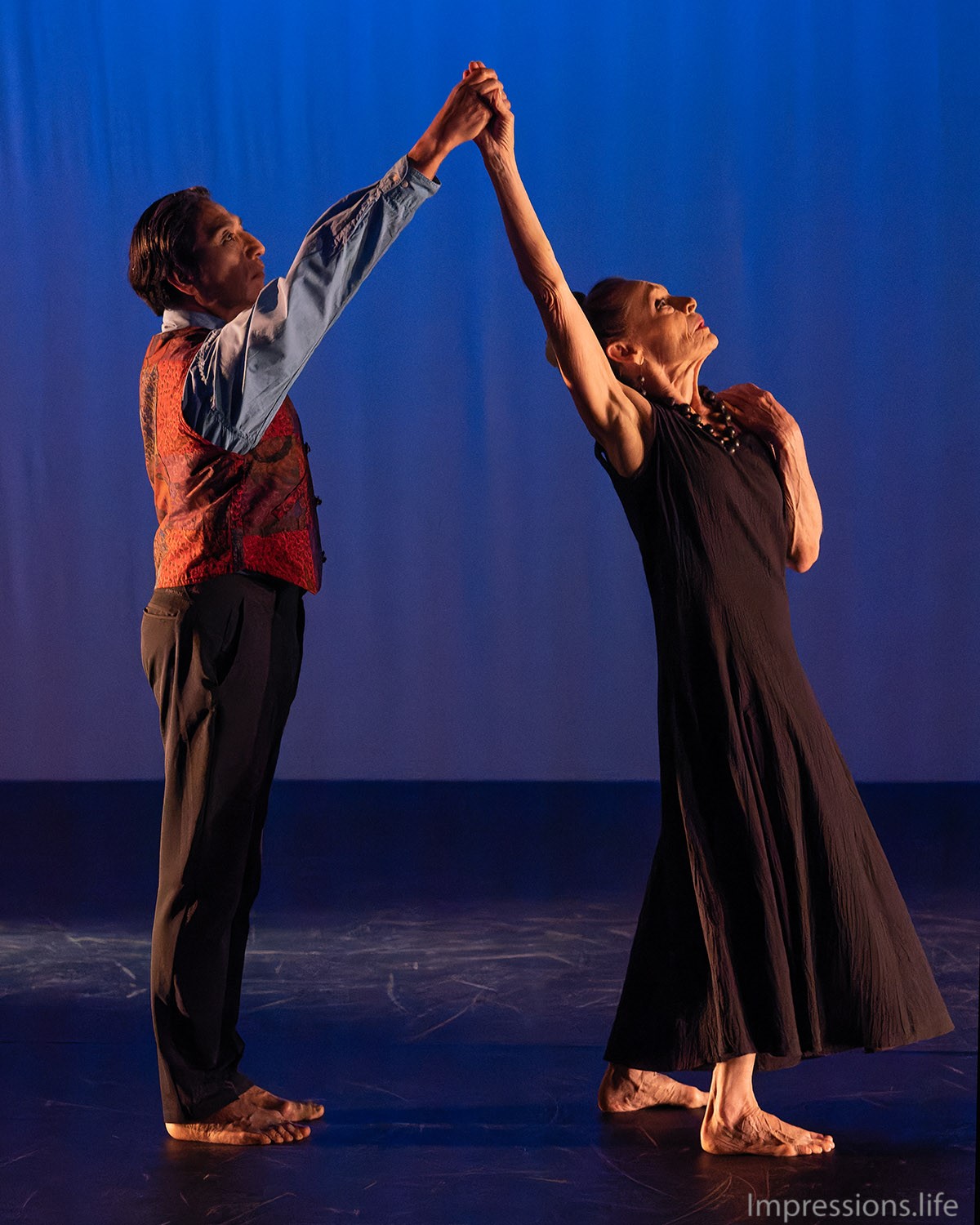
Anna Sokolow (1910-2000) is known best as a choreographer and dancer through iconic works like Rooms (1955), her study of urban alienation, and others presented prior by Dancefusion. The inclusion here of excerpts from Frida (1997), Sokolow’s homage ( created when she was 87), to her friend Frida Kahlo, and Magritte, Magritte (1970), a surrealist theatrical romp based upon images of René Magritte, reveals her mastery as a theater artist who, beyond her darker visions, also had a robust, absurdist, comedic side. The Sokolow Ensemble brings the Graham company star Christine Dakin into the role of Kahlo (both Sokolow and Dakin had their own connections to Mexico and dance companies there). From the beginning scene with Diego Rivera (Luis Gabriel Zaragosa), Dakin’s fierce yet introspective interactions with her artist-husband—minimal, a glance, a longer gaze, a calibrated walk to or from—is utterly magnetic. I thought of a matador interlaced with a bull.
Iconic, self-portrait images of Kahlo’s paintings form a backdrop for the excerpted scenes. I never took my eyes off Dakin’s spare, precise, torso and leg movements performed while prone on a Mexican textile in front of The Suicide of Dorothy Hale. Magritte, Magritte brings the paintings of Rene Magritte to life through a mix of mystery and comedy. The performers swap the painter’s original green apple in his painting The Son of Man for a punctured balloon. The Lovers II provides the image for a head-shrouded duet of anonymous lovers and Clarence Brooks plays the doozy and charming Assassin in a noirish theater of the absurd based off the painting, The Menaced Assassin.
The frolicsome play of Rachel Kantra Beal’s program closing Forces in G: Ode to a Ball (2017), could not extinguish the lasting memories of the Koner and Sokolow.
Envisions, Dancefusion and the Sokolow Theater/Dance Ensemble, Philadelphia Fringe Festival, Performance Garage, Sept. 9 and 10.