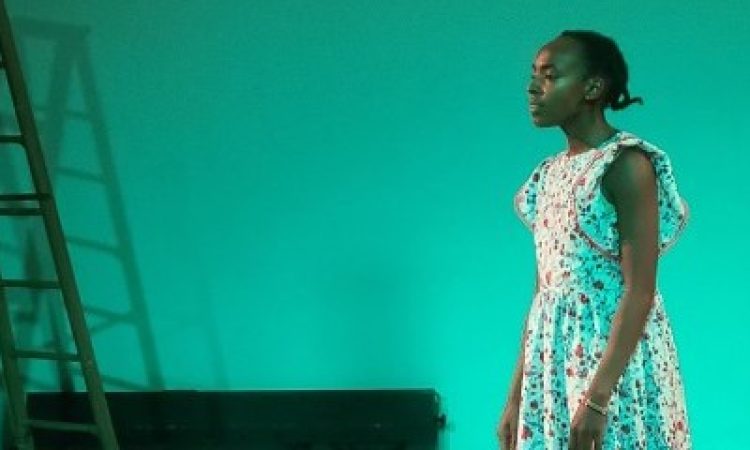
A Tree When No Moon Shines by 3 Pony Show/Keila Cordova Dances, is a poetic and embodied representation of the experiences of two black women in the colonial South. In this intergenerational dance-theatre work, Jaye Allison and Viyette Tiya’s body language carries the weight of the narrative. Their postures, gestures, and motifs are admirably delivered, adding to our sense of place and story.
The work is a collection of dance, film, song, and poetry. Various views of woodlands are projected as the backdrop. Ragtime music plays through the distinct sound of static that an old vinyl record emits. The dancers wear mostly cotton floral dresses and pull each new outfit from their suitcases positioned on either side of the stage. I could surmise that the timeframe is the 1900s and that wherever they are staying is not home. The identities and relationship between the two dancers remains somewhat anonymous, yet represent many. Still, it’s evident that their connection holds trust and safety, contrasting the climate of slavery in which these virtues seem like luxuries.
In a dance that skips, hops, and claps along to the upbeat Ragtime music, Tiya’s gleeful movement and cheery expression reveal emotions incongruent with her reality. Her jovial performance and distinctively front-facing position juxtapose the preceding monologue that speaks of dead bodies as road maps. While pleasant feelings surface from the high energy and presentation, I am reminded of the facade of joy as a necessity for survival. I consider ways that Black people have utilized dance as a resource for connection and coping during times of maltreatment. For example, the facetiousness behind dances like the Cakewalk, which was created by Black folks in mockery of their slave owners pre-Civil War, was a way to manage contempt. Like the function of many social dances throughout Black history, this dance represents how sufferable circumstances can be translated through sarcasm and humor, to become sources of amusement that strengthen community and bring forward catharsis. A Tree When No Moon Shines replicates this essence.
“When you don’t own the land, you don’t own your body. You don’t even own your own breath. Sounds like death.” – voice the dancers.
The tone intensifies when Tiya’s movement indicates abuse. At first, she pleasantly waves hello to someone while looking off into the distance. Her outstretched arm reaches for a handshake but stiffens at the attempt to exit the gesture. Her expression slowly fades from delight. She jolts forward and struggles to escape her invisible counterpart’s grip. Finally pulling away, she mimes grabbing something heavy, and chucks it in the direction of the perpetrator. Petrified at the sight, she hastily retreats in the opposite direction.
It’s not until several scenes later that the news of Tiya’s character’s abuse and the outcome of her self-defense surfaces in conversation with Allison’s character. Knowing that she would be subject to persecution if anyone finds out what happened, they decide to flee. Holding hands and their suitcases, they run off with vigilance, hiding momentarily beneath a tree, *cue blackout*, where no moon shined.
The audience is left to question whether their ownership of land, body, and breath would be reclaimed – but there is some assurance in knowing they would journey together.
A Tree When No Moon Shines, 3 Pony Show, Icebox Project Space, Cannonball Festival, Philly Fringe Festival, Sept. 2, 11, 19.