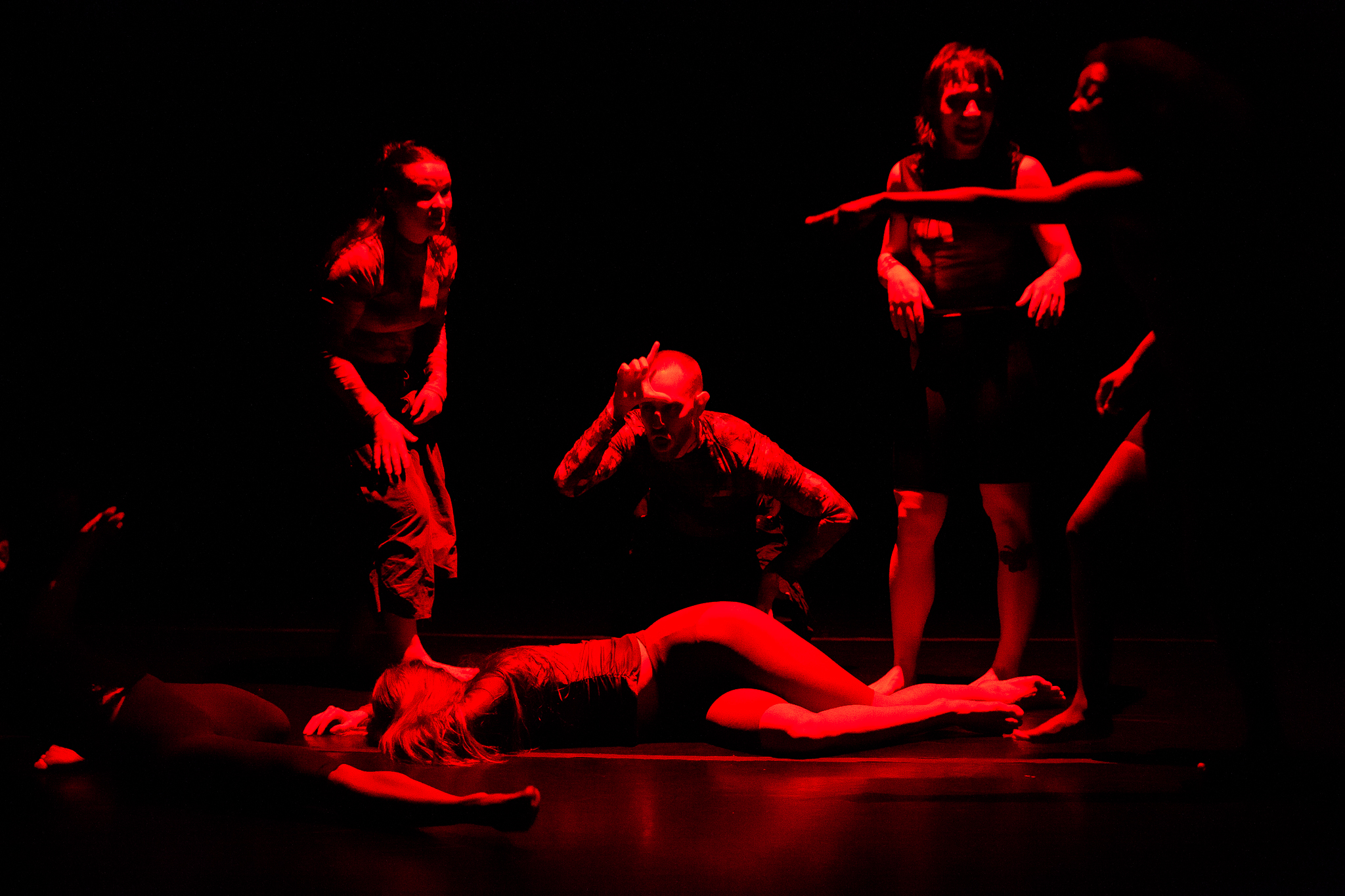
The silence in the theater looms large. A single bulb illuminates the stage, revealing the crumpled body of a woman. In that moment, choreographer Olivier Tarpaga captures the terror, the raw emotion for which nothing could adequately do justice.
This stark simplicity is the brilliance ofOnce the Dust Settles, Flowers Bloom, Tarpaga’s dramatic depiction of resilience in the face of terrorism. According to Human Rights Watch, the armed conflict between the government of Burkina Faso and Islamist rebels, which began in August 2015, has killed nearly 7,900 people and forced over 2 million people from their homes. This is what inspired Tarpaga to return to his homeland for inspiration and interviews for this work.
Prior to the performance, Tarpaga, director of African Music Ensembles at Princeton University, and Professor Nicole Myers Turner from Princeton’s Department of Religion take the stage for a casual discussion about timely topics, including two typically avoided: religion and politics. “A lot of my work is about the politics on the continent of Africa,” Tarpaga says.
Dust is no exception. Born in Burkina Faso, Tarpaga shares how his experiences with war as a child are seared into his memory and shape his artistic productions. But he does not rely on memory alone for this work. He risked his life to travel back to his home country, overrun with violent jihadists, to meet with women in a refugee camp. These women, who have no voice, are the inspiration for Dust, described as a “feminist Africanist” piece.
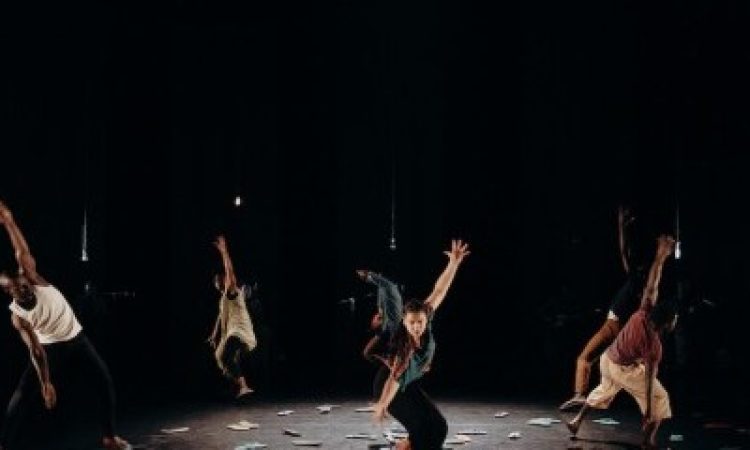
Six multi-gendered dancers bring Tarpaga’s vision to life, depicting both the oppressed and the oppressor: Ousseni Dabare, Joannie Christie Dossou, Aicha Kabore, Jean Robert Koudogbo-Kiki, Michael Nana, Sofia Nmili, and Silvie Sanou. They take the stage with slow, measured movements, as if waiting for the other shoe to drop. Literally. Dozens of shoes are later scattered across the stage, re-creating what Tarpaga witnessed in the refugee camp: women dancing amidst piles and piles of shoes. In his onstage reiteration, the barefoot dancers shuffle in tiny, quick-time steps. They move clumped together, women and men, as if there’s safety in numbers. The tension is palpable. The piles of shoes remind me of Holocaust museum exhibits, and I make a mental connection between the terror inflicted by both the Nazis and Islamist rebels.
Graceful, flowing movements are juxtaposed with manic, jerky ones, capturing me by surprise. With their backs to the audience, dancers plant their feet wide apart, knees bent deep, buttocks flicking in what might be considered twerking. Because I previously reviewed a book on the origins of jazz dance, I viewed it as authentic African dance, a precursor to the “get down” stance in jazz.
In one scene, the dancers’ movements are defined by bouncing motions, bringing to mind a racing heartbeat. In another, dancer Nmili twirls faster and faster, a veritable whirling dervish. It’s as if she, like the unfolding events, is spinning out of control. Throughout Dust, the dancers often move in unison, their steps in sync. Sometimes they break into unique solo movements. This choreography serves as a reminder that, while trauma is experienced at the community level, each person deals with it differently.
In a nod to the work’s title, the dancers clap, and “dust” clouds form, a surreal effect mirroring the aftermath of a massacre. I can’t help but recall the biblical phrase, “Ashes to ashes, dust to dust.” Flowers clutched in their teeth, the dancers honor those for whom there are no graves to mark.
Dust ends with a heart-piercing plea, more wail than song, that takes the art of ululation to a new level. Then silence. Then standing ovation. Like a phoenix, hope arises.
Once the Dust Settles and Flowers Boom, Olivier Tarpaga Dance Project, McCarter Theatre Centre, Sept. 29.