Five years after the first performance of Giselle at Philadelphia Ballet in 2019, the company’s artistic director Angel Corella brings back this epitome of romantic ballet to Philadelphia audiences. Premiering in 1841 at the Paris Opera, the two-act ballet Giselle was choreographed by French ballet masters Jean Coralli and Jules Perrot and showcased the power of pantomime in translating emotions in the first act and reinforcing an ideal of femininity in the second act.
The ballet Giselle tells the tragic story of a beautiful and innocent young peasant girl Giselle, who falls in love with Count Albrecht but dies of heartbreak due to Albrecht’s unfaithfulness. At Giselle’s grave, the supernatural female figure, Myrtha, the Queen of the Wilis, summons Giselle’s ghost to join the vengeful maiden Wilis to take revenge on men at night. However, Giselle’s staunch love and benevolence rescue Albrecht from Wilis’ curse of dancing to death.
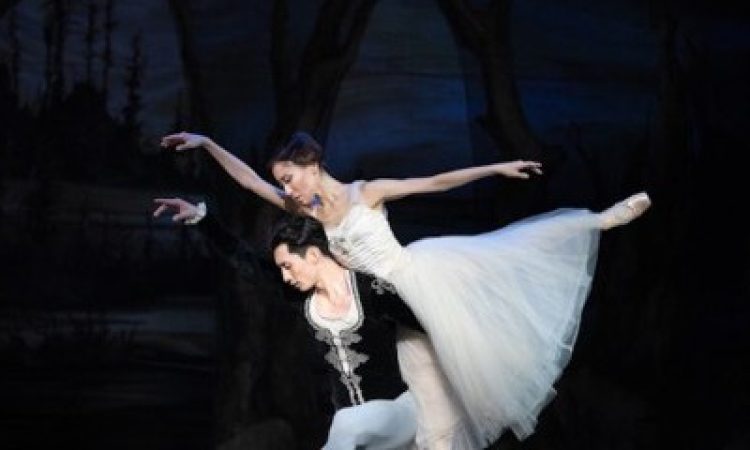
When restaging this French masterpiece this time, Corella innovatively casts Asian dancers Yuka Iseda and Zecheng Liang as Giselle and Albrecht on the opening night, which is rarely seen in the ballet world. Not only does this step display the company’s embracement of racial diversity, it is also due to the disciplined and virtuosic technique of the Asian ballet bodies. Additionally, their nuanced performance in gestural pantomime and emotional expression promotes the delicate and spiritual romantic aesthetic. Being partners in many ballets, Iseda and Liang’s polished and seamless collaboration seized my eyes and heart.
Corella’s exquisite choreography highlights the charm of pantomime ballet that emerged in the 18th century Europe in conveying meanings and emotions in a non-dialogue context. Adding to the original pantomime such as a hand circling a face as “beautiful” and pointing to the ring finger as “engagement,” Corella tactfully blends stealthy fingertips touching and subtle gestures into the storyline and develops a compelling love story between Giselle and Albrecht. The overuse of air kisses that make audiences laugh also emphasizes the libertine characteristic of Albrecht. In addition, Iseda’s delicate performance shows Giselle’s nuanced shyness and passion, which corresponds to the fragile and emotional femininity of romantic imagery.
In the first act, Corella’s impressive musicality in simple and clear steps for corps de ballet support an idyllic, delightful scene of a Middle Age European countryside. The two soloists’ virtuosic allegro pas de deux heightened the excitement of this tranquil audience. Sydney Dolan’s poetic arms and Pau Pujol’s powerful, buoyant jumps add a majestic flavor of Marius Petipa’s classical ballet to this romantic piece.
In Giselle’s variation, Iseda’s breathtaking arabesque, leg extensions, and ethereal hops on pointe reveal her fragile character, shocked and heartbroken after discovering Albrecht’s noble identity and engagement to the Prince’s daughter Bathilde. While Iseda’s Giselle ghost in the second act maintains delicacy and ethereality, her refined emotional transition in the first act attracts the eyes and empathy of audiences.
Liang’s portrayal of Albrecht in his variation shows his strong technique as well as partnering with Iseda in the second act. To foreground the airy beauty of the female character, Liang powerfully lifts Iseda from the ground and then above his head, which appears effortless. His flawless support reinforces Iseda’s endless extended legs in développé and penché. The two dancers’ unified pas de deux illuminates the second act and accentuates the tragedy of their impossible love. In addition, Liang’s variation smoothly fuses the highest standard of male technique such as his clean fifth position, high spring in sissonne, and unbreakable turns with the miserable plot of “dance to death.”
The love, purity, death, and forgiveness in Giselle demonstrate the longevity and accessibility of this classic work to contemporary audiences. Under Corella’s direction, the unison of the corps de ballet and the artistic principal dancers and soloists in collaborating with the orchestra manifest Philadelphia Ballet’s virtuosity in delivering the peak of ballet blanc.
Giselle, Philadelphia Ballet, Academy of Music, February 29 – March 10.