A voyeuristic inception imposes self-surveillance as we watch ourselves enter the room. Several cameras set up around the Icebox venue project live footage onto the wall, resembling a CCTV security room. We are our own spectacle.
From silence, a figure lurks in the dark, wearing a black sheer fabric that covers their face, and an aura that’s eerie, obscure, unknown. There’s a weariness to their walk as they circle the audience at a slow but steady pace, eventually arriving at the stage. Trudging forward with a weighted posture, each foot lands with a heavy thud. Their black and gold body suit shimmers, and a gold mask hangs from their waist.
“This is not a performance.
This is not surveillance.
You gon have to participate.”
Mawu Ama Ma’at Gora speaks into a microphone in a tone that delivers the necessary amount of intimidation and command to render the audience obedient. Gora maintains a threatening essence, demanding feedback, which eventually softens into the recognizable tone of tough-love. They share a personal memory and invite us into a protection ritual. Gora embodies the same stern, obligatory assertion that Black mothers send their children out into the world with.
“No terrain in this system holds the breadth of Black mourning…
This is not a safe voyage. There is no map…
Only you choosing to look back while moving forward.”
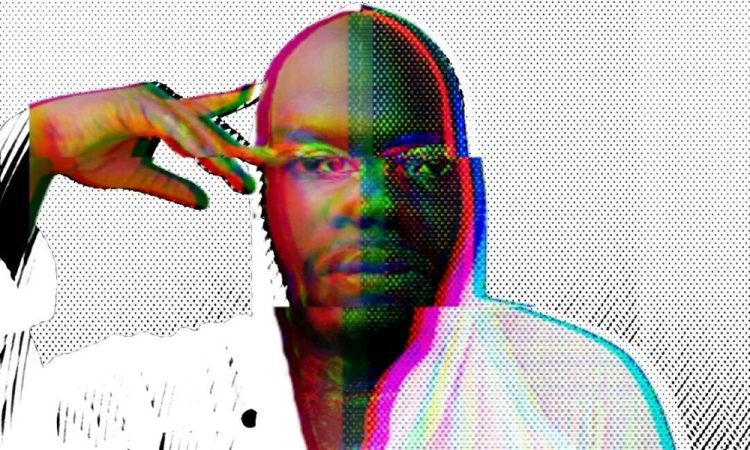
jaamil olawale kosoko is a multi-spirited Nigerian American performance artist, author, educator, curator, and 2026 Guggenheim Fellow for choreography. Their latest work, //shrouded\\, which premiered at the Miniball Festival presented by Cannonball, evokes a necessary discomfort within the container of performance. The nation’s mournful past and present feel alive and acknowledged here through a stunning blend of movement (performed by Gora & Song Tucker), poetry (kosoko), video (Jordan Deal), musicianship (Everett-Asis Saunders, Black Maij, & Kingsley Ibeneche), and transcendent symbolism. The work unfolds slowly, bit by bit, taking its time to allow viewers to be present with each activation and to embrace the details. This patience contrasts the urgency and fleeting attention characteristic of the media and tech-addicted era that our current social landscape demands.
Throughout the show, the video element adds symbolic and sensory dimensions to the work. Deal’s video design invites us to see ourselves through live camera feeds, read text captioning of a poem as it’s read aloud, and witness several perspectives at once as archival footage of three interviews intertwine in a convoluted, nonlinear playback. Each interview subject elaborates on where and how one may seek sanctity. Their perspectives juxtapose dignity and damnation amidst their reflections on Christianity, African Traditional Religions, and the intersections of queerness, religion, and definitions of divinity.
A duet danced by Tucker and Gora indulges repetition and synchrony that declare impact, power, and presence. Using stepping rhythms and an energized demeanor, the sound of their boots’ forceful landing against the stage amplifies from microphones positioned underneath. Eventually, the cadence dissolves as their shiny gold evening gloves become weapons: one arm extends forward as the barrel of a shotgun, with the other hand cupping it underneath as if clutching the handguard and reloading every so often. They remove their long braided wigs to use them as whips. Beating the floor with full-bodied effort and striking repeatedly until they tire. The undeniable reference to the brutality of slave owners is hard to watch – it conjures a memory that most never have to acknowledge, or witness. The effort and energy put into striking something (or someone) with such force, the posture required, the intent… to see it embodied is a chilling reminder of the grotesque, maniacal motives imposed by white authority that became the groundwork of the United States. This reminder of our history is one that, if forgotten, makes it easy to minimize, overlook, and justify the covert ways that same brutality underlies present-day deprivations, abuses of power, exploitation, and disposability practices at the intersections of class, race, and gender-based violence.
Gold garland that lines the stage flies upward from the flogging to reveal bright yellow lights that glow from underneath the stage like sparks of fire; a perfect segue to the video installation of the Nottoway Mansion succumbing to flames. This former plantation-turned-historic site and wedding venue was the last remaining antebellum mansion in the South. Located in White Castle, Louisiana, the property built from slave labor met its demise last year when the plantation was destroyed in a fire. Multiple views of the destruction collage the wall as the images layer across the projection.
//shrouded\\ is a dignified, solemn, and haunting work reflecting the sinister contemporary sociopolitical context while addressing it as a continuation of colonial violence repeatedly endured and overcome. Rooted in the spirit of Sankofa, //shrouded\\ demonstrates how to sit with the pain of the moment – not passively, not as a sign of surrender, but attentively and engaged with remembrance and foresight.
“This is not a safe voyage. There is no map. / Only coordinates of feeling. Only a pulse. / Only you choosing to look back while moving forward.” –kosoko, “MEMORY ORIGIN”
//shrouded\\, jaamil olawale kosoko, Icebox Project Space, April 17-19.