dance history

Fifteen Years of Dance Writing at thINKingDANCE

Emilee Lord

Dive into the archive and move through the years with us!

Richard Move wears a tight sheer dress of a rich dark blue, with only their face, hands, and feet visible. Their legs are open wide, only the balls of the feet on the floor, and they extend their gripped hands to the left as they dramatically turn their head to the right. Fans of modern dance will recognize that this image is a recreation of the dance solo "Lamentations" by Martha Graham.
Photo: Josef Astor

Being Martha at BAM

Brendan McCall

Richard Move on embodying Martha Graham in the 21st Century

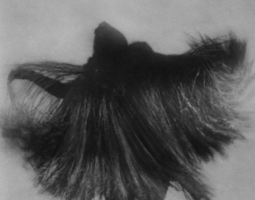
n a soft, blurry black and white photo, dancer Mary Wigman performs in Idolatry (Götzendienst), part of the solo cycle from Ecstatic Dances as revised for her first solo tour in 1919. She wears opaque black tights, shoeless, and a thick fringed black dress that covers her entire torso. It’s difficult to tell, but the shadowy form looks to be throwing her head back. Photograph Courtesy of the Mary Wigman Archive, Academy of Arts, Berlin.
Photo: Hugo Erfurth

The Rear-View Mirror: Hindsight from a Dance Scholar

Megan Mizanty

How does the lens switch as time passes? Susan Manning's essays are collected in Dancing on the Fault Lines of History.

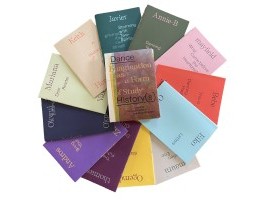
Fanned out in a circle on a white surface are 12 booklets in a range of colors. Here and there are sections of text covered or obscured by other booklets. In the center of this circle is the title piece in a wash of brown darker at the bottom and lightening toward the top. The vague image of pine tree tops on its surface. It reads, Dance across the top and History(s) across the bottom with the subtitle Imagination as a Form of Study in the center. Underneath in smaller letters it reads edited by Thomas F. DeFrantz and Annie-B Parson.
Photo: Jack Lazar

To Us/Because of Us

Emilee Lord

Dance is a Weed

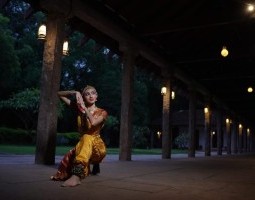
Lakshmi Thiagarajan, author of the article, kneels gracefully on the ground in a covered walkway outdoors, lit by lanterns. One leg is forward, clad in yellow and red silk pants with a percussive bracelet on her ankle. Her clasped hands frame her face, adorned with a bindi and golden headband. She looks off to the side with a small smile.
Photo: Lakshmi Thiagarajan

Beyond Entertainment: Exploring Perspectives on the Purpose of Dance in South Indian History

Lakshmi Thiagarajan

Dance as an expression of political power, religious fervor, and of women’s sexualities.

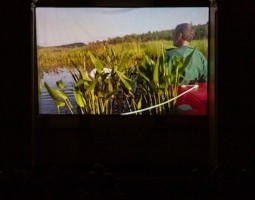
On the right, a man sits in a red kayak with his back to the camera. He wears a green shirt. A white rope is tied to the back of his kayak and reaches out of the frame. He is on a lake heavily grown in with green plants. The water is blue and still. There is a mountain in the distance.
Photo:Rachel Keane

All That History in Those Very Seats

Emilee Lord

Steve Paxton remembered

Photo: Maria Baranova

Floored

Emilee Lord

Maybe you dance. You are a part of it.

Photo: Kristi Yeung

Will we ever really dance again?

Kristi Yeung

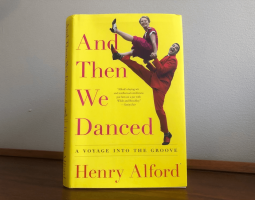
Pandemic-mediated reflections on the book And Then We Danced

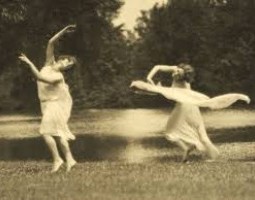
Photo: University of Wisconsin-Madison Archives

Moving Lessons: Relearning Our History as Dance Educators

Eleanor Goudie-Averill

H’Doubler didn’t teach from a codified movement technique, and valued improvisation and discovery above all.
Photo: Emma Cohen

Dance Studio Life

Emma Cohen

Melissa Klapper’s new book offers a social history of ballet class in the United States.