Nobody likes war. Right? But, c’mon, what can we really do to change it? The military-industrial complex is way too big to take on. Besides, I really like my iPhone. And my Nikes. And my car!
The US makes up 4% of the world’s population, but operates 1/3 of its automobiles, and consumes 1/4 of its energy supply.1 How do we manage this? By chance or by force? Does the last decade (or two, or three…) of continuous warfare have anything to do with our ability to consume resources so ravenously?
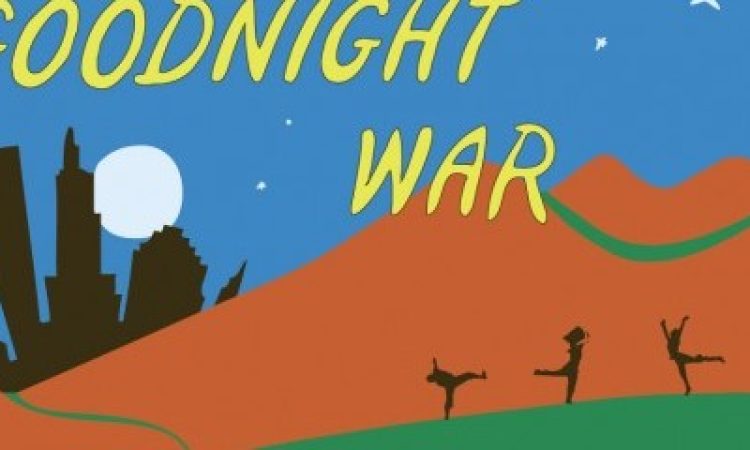
Katherine Kiefer Stark/The Naked Stark is examining some of these issues in her new work, Goodnight War, which premieres April 19-21 at the Broad Street Ministry in Philadelphia. The work’s title, as well as images used to market the show, are a play on Margaret Wise Brown’s children’s classic, Goodnight Moon, which was first published only two short years after the close of World War II.
Part of the inspiration for Goodnight War’s opening section has to do with the confrontation between the “real” world (and all of its imperfections) and the fantasy world that Stark, as a child, imagined she would inherit. Now Stark has a two-year-old of her own. At the beginning of Goodnight War, Stark welcomes the audience with a talk that relates her bedtime routine with her daughter Lucille to the idea of creating an imaginary funeral. The performance unfolds as a ritual: eulogizing, celebrating, and mourning the imagined death of war.
Stark has bravely set out to examine the choices she makes everyday, and how and why they might support war. Not only economic choices, she’s also looking at how we approach conflicts, our comfort (or discomfort) with disagreeing, and our perceptions towards our sense of safety in daily life. In one of Goodnight War’s three eulogies, Stark is thinking through the forward march of progress: why are we so hung up on building, winning, achieving? Where does process fit in to our model; what about sustainability?
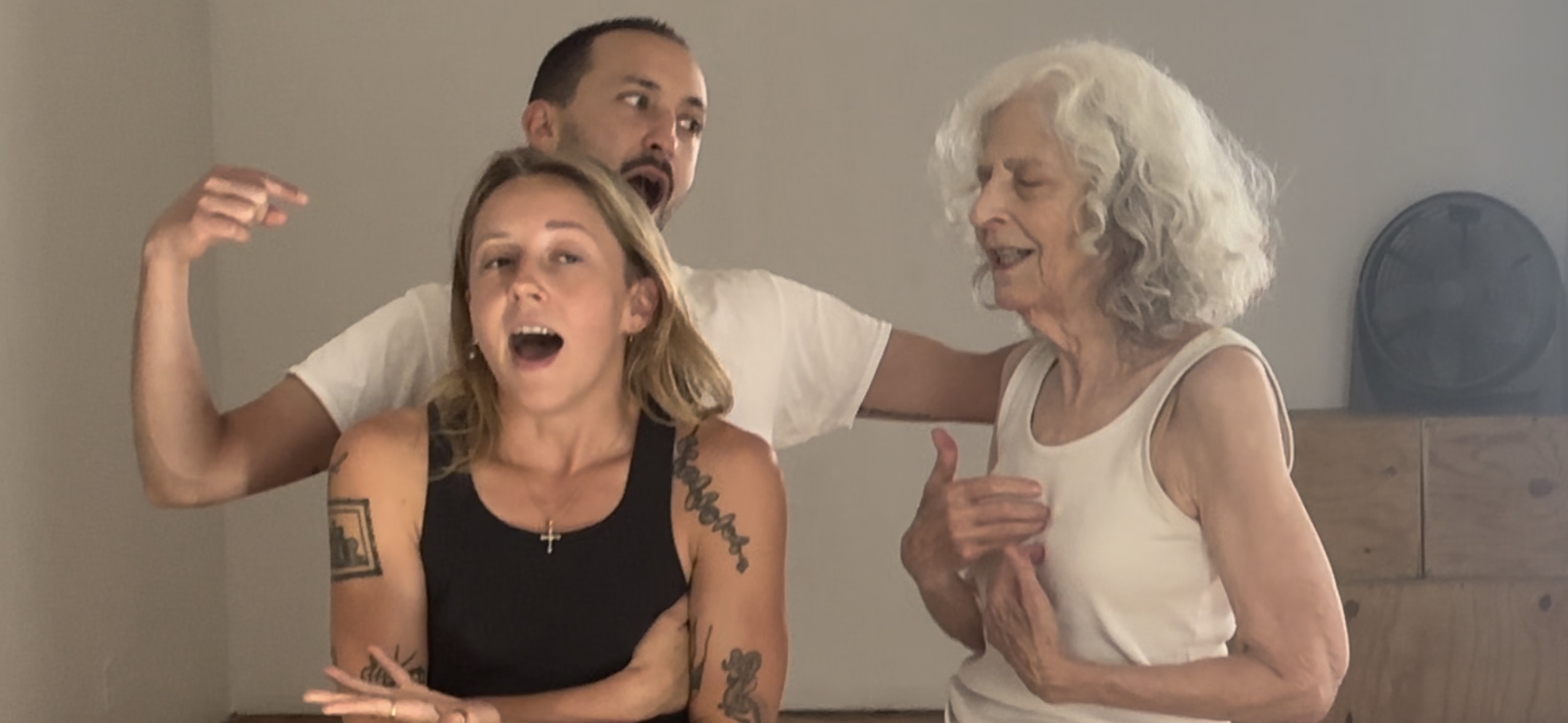
Much of the movement for Goodnight War is task-based. Dancers build and knock down towers of cups. Stark learns to ride a bicycle in real-time (she used to ride as a kid, but hasn’t much since and has purposely avoided brushing up on her skills for this production). Partnering movement also comes out of this task-based approach, dancers treat each other’s bodies as material constructions in the space. According to Stark, she’s also working with high physicality, including running, sliding floorwork, and dance phrases built around the rhythm of military cadences. (Think: “I don’t know but I’ve been told…” and “Left. Left. Left, right, left…”).
The audience seating for Goodnight War will shift from two rows facing each other, to a circle with a solo dancer in the center, to a circle facing out; viewers move through parts of the piece with the performers. Finally, the audience and performers all exit the space together, as if to cement the fact that all have entered into a shared liminal space over the course of the hour-long work.
Goodnight War asks some tough questions. But the most difficult, according to Stark, is “If war was gone, what would I miss?” This is what prompted the eulogy model: is there anything we can truly say to “mourn” war’s passing? According to Stark, “there must be something we like about war, or wouldn’t we have gotten rid of it a long time ago?” The quick answer, “of course we wouldn’t miss it,” is too easy for Stark, who says “I’m trying to be really honest with everyone about how I’m thinking about that, and I hope that maybe witnessing my own struggle makes people reflect on that question themselves.”
1
http://articles.cnn.com/1999-10-12/us/9910_12_population.cosumption_1_global-population-worlds-scientists?_s=PM:US
Goodnight War, Katherine Kiefer Stark/The Naked Stark, Broad Street Ministry April 19, 20, 7:30pm, April 21 4:30 and 7:30pm. tickets: $8-$12, at thenakedstark.com/goodnight-war