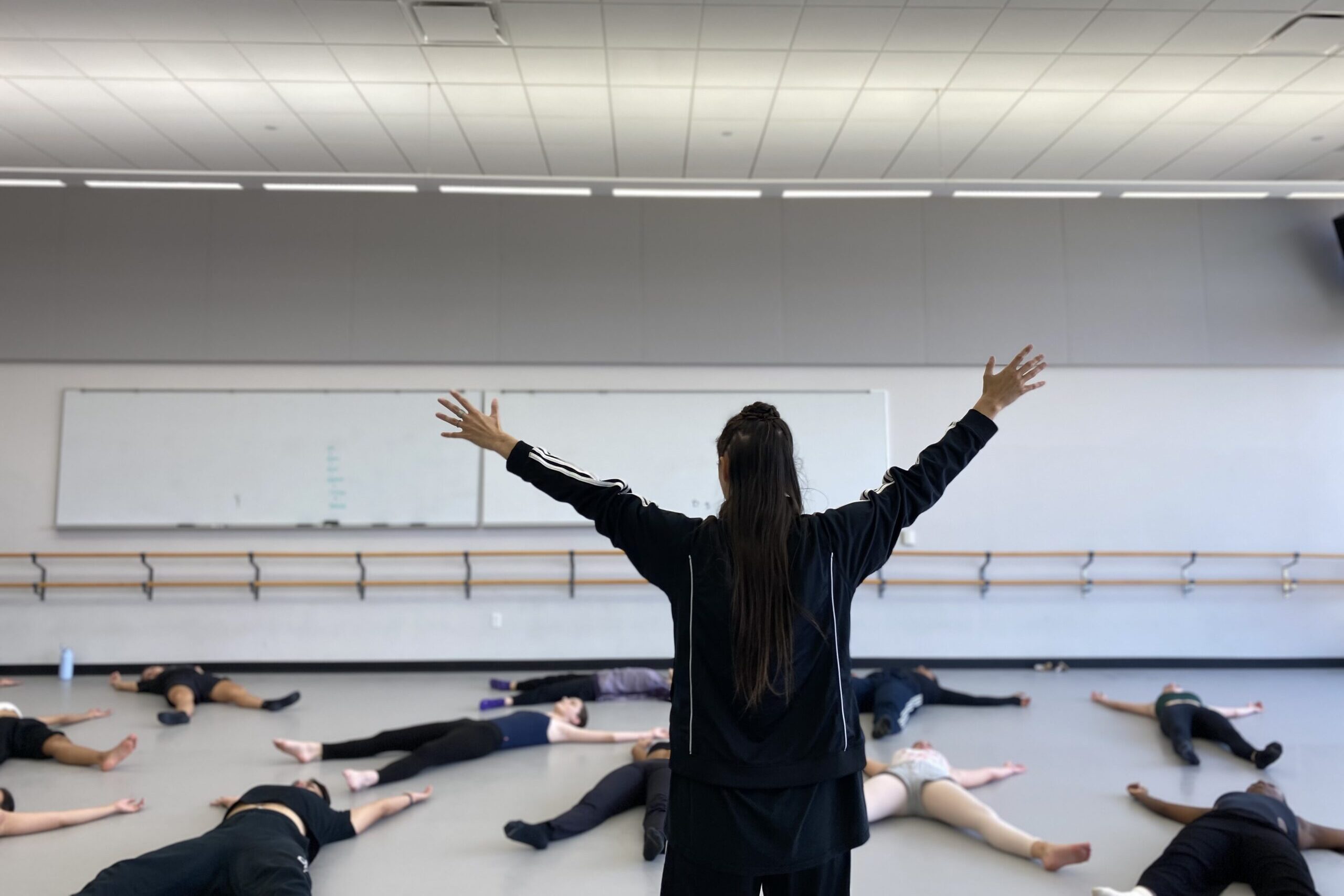
“I work from instinct,” remarked Roni Koresh on my recent visit to his Chestnut Street studio. And as Koresh turned on the music for the final section of a new work, The Heart, I witnessed his intuitive working method unfold. The dancers formed a line facing the mirrors. He stood center and walked forward in slow motion (the dancers call it a “moon walk” and laughed when Koresh teasingly suggested that they should be costumed in space suits). He then added in a lean of the body, an arm motion, then quickened the walking pace until he and the dancers are jumping in unison, impossibly frozen at the top of each rise. After showing the material once, Koresh gave the dancers time to work out the specifics of timing and action. When he added the music back in, I saw their first pass at the Koresh season finale.
Coming off his 20th Anniversary that included many reconstructions but little new, Koresh developed three premieres for the upcoming performance: Out/line, a 45-minute piece set to Jonathan Bowles driving, industrial score; The Heart, a character-filled comic romp inspired by a Karl Mullen poem; and Bolero, Koresh’s take on Maurice Ravel’s celebrated work. Koresh describes his Bolero as a never-ending layering of movement, and I can imagine his virtuosic and capable dancers, comfortable with his personal blend of modern, jazz, and ballet quotations, confronting this exacting choreographic challenge.
Even in rehearsal, these dancers moved full throttle through whatever material they were given. The dance company model, which includes daily technique class and rehearsal, clearly allows Koresh to maintain dancers who can meet the physical demands of his work. There is also a sense of camaraderie in the rehearsal room, an atmosphere of “we are all in this together.”
As they continued to rehearse The Heart, dancing short solos, duets, and trios of explosive, precise movement, the company members watching on the side applaud…and I do as well. I can’t help it, smiling and clapping (probably looking the fool), wanting to join in their Koresh family for an hour, to share in the company’s vitality, in the clear joy for dancing palpable in the room.
Walking down Chestnut having left their rehearsal with plans to see The Heart live in a few weeks, I tried out the slow motion “moon walk”, body leaning forward, then arm, then faster, then jumping, then…
Koresh Dance Company, Suzanne Roberts Theatre, April 26, 7:30pm; April 27, 8pm; April 28, 2 and 8pm; April 29, 7pm. www.koreshdance.org