Sometimes you don’t even know who you’re in bed with. And whoever they are, you don’t particularly like them. Ah, the ills of decadent civilization! In Hush Now Sweet High Heels and Oak, six dancers in white undies crawl under white sheets on white mattresses before white curtains lit by white lampshades swinging on white ropes. Who are these people? They themselves must each be asking that of their unexpected bedmates—or so their expressions suggest. Crawling out of the sheets, they jump in choreographed wildness on the mattresses that their unheeding partners still occupy. They sandwich themselves between mattresses and hump, jump, and roll. Ghosts rise from the sheets, strip to human flesh, climb the ceiling-high curtains behind the bedding and swing, sway, curl, and stretch themselves from the fragile cloths. As they reach the very top of the rigging, the fabric tears, slowly sending each climber back to earth: defeat?
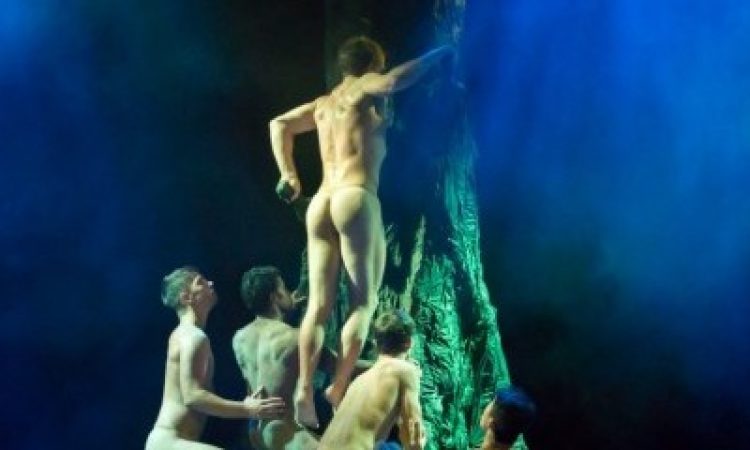
The undies come off; all—five men and one woman—are in dance belts, chests bare. The mattresses and curtains disappear and we see our human flesh in the sands of ancient time. The six performers creep, like tadpoles, to the tree upstage and, with effort and help from one another, three ascend to its top and curl cocoonlike around its highest branches. The other three grab ropes that descend above the stage sand and brachiate through the air: monkeys, flying and swinging! The cocoons unfurl in the branches and the tree figures swing from their ankles (yes, it’s terrifying but, at moments, beautiful), like upside-down possums accompanied by a sound track of nocturnal birdsong and cicadas. The former brachiaters leave the air for the sands, only to rise again like Neanderthals, hulking toward one another, awkwardly encountering and hugging: we are deformed, primitive, strange.
But not so strange as the steel heels that arrive next. Man has discovered tools: we can torment one another yet more viciously. But take those hideous implements off our bodies and we rejoin the earth from which we sprang: all six creatures, barefoot again, trickle sand through their fingers, roll across the beach (seals!), flip, somersault, and dive over one another, to the accompaniment of “You Are my Sunshine.” Yes, we have at last emerged from this nightmare of heartless civilization and oozy evolution into the sunshine of play: these creatures even smile.
Forget that bad one-night stand: we are pure naked animals after all.
Hush Now Sweet High Heels and Oak (2013 Fringe Festival), Brian Sanders’ JUNK, 23rd Street Armory, September 7-15. http://fringearts.ticketleap.com/hush-now-sweet-high-heels-and-oak/#view=calendar.