Inhale. Rock, release.
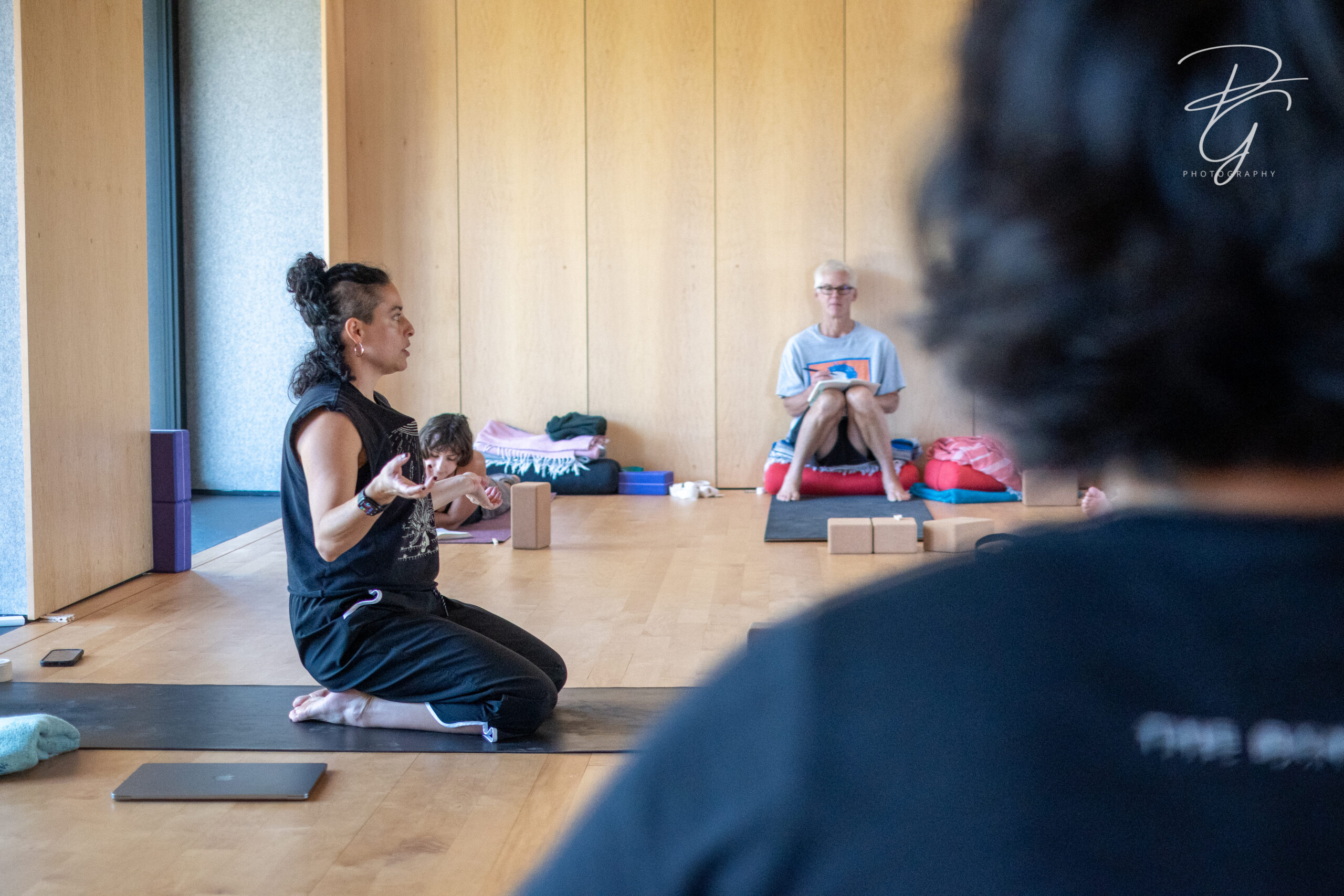
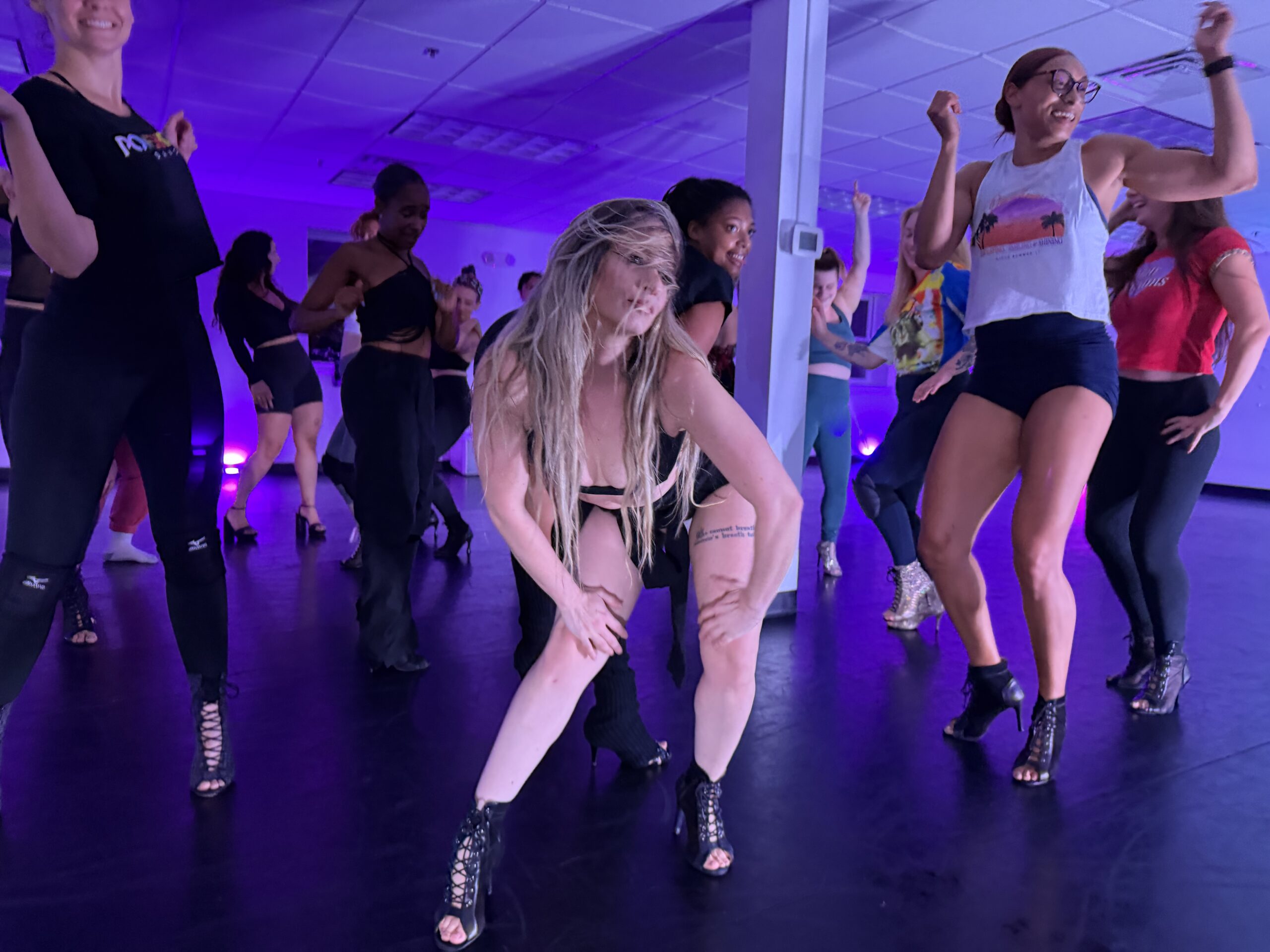
In Her: The Female Experience from Birth to Death, a cast of seven women, representing a wide span of demographics, used their varied strengths of storytelling, song, and physical expression to create a performance that celebrates the female experience.
Legs spread, exhale, tense hands.
Recurring movements take different meaning throughout a woman’s life. Her confronted issues like sexual trauma, domestic violence, body image, legal injustice, the physical evolution of the female body, and generational connections. There were so many major topics which could have stood alone as content for full-length productions that I wondered if the work plunged deeply enough into any single issue. With some smooth but mostly abrupt transitions, each scene gave a certain intensity without any opportunity for audience recuperation.
Lie down passively, rise to fight. Fall to the floor. Stillness.
A scene of gossiping grocery shoppers quickly shifted to a woman chiding the world for judging her African American hairstyles. In another moment, a young girl was to be unjustly cavity searched. The police officer’s corrupted voice of reason overlapped the girl’s building anger until an outburst dissipated to a new scene of empowerment, describing the female body and spirit as a gift. I was deeply moved, but still lacked a sense of cohesiveness for the piece as a whole.
“Claim your body. It belongs to you.”*
The cast used their bodies as instruments, scenery, and props. In a story where an enraged, abusive husband searched the house, one cast member frantically paced amongst the ensemble, who was standing in a line, facing the back of the stage in stillness. The woman representing the husband carelessly lifted and hit the body parts of the women as if they were pieces of clothing on a closet floor.
“Yay feminism and condoms!”
They used their voices to be heard, to create harmonizing soundscapes, to celebrate, to scream in pain and pleasure. Rhythms emerged through spoken word, humming, stomping, and drumming on the body. Comfort exists within rhythm, as it offers a sense of community and belonging, allows for trust in expectation, and offers common ground with others.
“I love my belly and I love my butt!”
Without a doubt, Her represented the overwhelming complexity of living as a woman. It questioned, and embraced, female identity, inviting all women to exist not only as they are, but as sisters.
*All quotations appearing in this article were spoken during the performance.
Her: The Female Experience from Birth to Death, Basement Poetry, The White Space at Pig Iron, September 10, http://fringearts.com/event/female-experience-birth-death-2/