We are accustomed to being fed information of every kind through the repetitive hammer-like techniques used in advertising and a heavy reliance on image. It becomes increasingly hard to connect screen stars, performers, or celebrities to their real-life, off-camera selves. In the dance world, too, artists are often objectified, known exclusively for their physical virtuosity or inimitable stage presence, and relegated to oblivion whenever their particular prowess no longer qualifies them for residency on Mount Olympus. Might our assumptions and bold judgements about these public figures become more thoughtful if we were privy to the backstories?
In Francine Haskell and Jane Gussin’s collaborative biopic film, Denise, former Joffrey soloist and principal dancer Denise Jackson takes us straight to the backstories, with biographic details curious enough to need no doctoring. Photos and filmed sequences selected from Jackson’s home library and the Joffrey archives vivify spoken recollection. The result inspires a mix of wonder and admiration for an illustrious seventeen-year career (Jackson was active from 1969 to 1986).
Yet the dangers here are several: Does demystification dull the brightness and beauty of an acclaimed star? Are the ordinary and the extraordinary—or life as we know it—arresting enough in tandem to sustain our interest? Do we really want the truth or are we addicted only to the mystery, the smokescreen? The film tacitly raises these questions.
Documentary producer-directors Haskell and Gussin, a filmmaker and motion graphics designer clearly believe that backstories can reshape our perceptions. The film’s “outside-inside,” public-private approach sheds new light on Denise, the ballerina. Guided by Jackson’s picture scrapbooks and colorful memories, we are invited to consider the disclosures as part and parcel of the whole. The film has a “connect the dots,” participatory feel that keeps you watching and listening. Commonplace, informative detail is aptly balanced with surprising revelations. The retired dancer’s revelations about childhood frailness and an abnormally slow growth rate gain importance when juxtaposed with her reputation for superior body strength and exemplary technical prowess. Names of duet partners like Phillip Jerry, Gregory Huffman, Gary Chryst, Kevin McKenzie and Rudolf Nureyev sprinkle her conversation. At times, Jackson’s measured delivery and unassuming demeanor belie the grandness of the subject or colleague in question. The contrast between what she says and how she says it is riveting.
Included in Denise is a clip of Michel Fokine’s 1911 neo-classical duet Spectre de la Rose 1911. Partnered by Rudolf Nureyev later in life, Denise Jackson remembers seeing the legendary artist up close for the first time: “I was one of the youngest students at the Joffrey. Rudolf Nureyev and Margot Fonteyn visited the school while performing in New York. We all peeked in awe from the studio doorway. Who would have imagined that I’d wind up dancing on stage with him years later?” As I watched the clip, I delightfully realized it was the very same one I’d shown to my college students as a prime example of artistic and technical excellence. What satisfaction!
The meeting and mixing of art and life were again underlined by the chosen venue, New York’s posh, Upper East Side Colony Club. In early March, a private viewing of Denise was held in the Colony library, whose hushed elegance and understated beauty echo in Denise Jackson. With keen presence, the petite terpsichorean charmed the small crowd with an opening disclaimer: “The woman you will see on screen is much skinnier, much younger, and isn’t a blonde, so beware—you’ve been warned!”
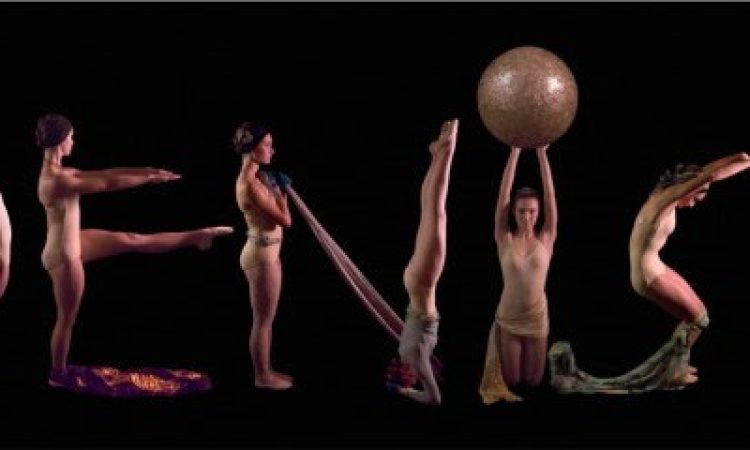
One final backstory: The documentary’s opening shot exemplifies the collaborative nature of Denise. In Jane Gussin’s beautiful graphic design sequence, Francine Haskell’s dancer-in-training granddaughter shapes her body to spell “Denise.” As the camera suspensefully pans from left to right, a gilded hand-held ball “bounces” above the “i.” It is a whimsical, hand-crafted GIF, a subtle foreshadowing of the film’s interwoven motif. A thoughtful, creative start for a multi-layered story.