In a quest to reach new audiences for performing arts in Philadelphia, Theatre Philadelphia and thINKingDANCE are joining forces and exploring how dance writing and discourse can provide new perspectives on theater. Since May 2018, tD writers have been lending their varied backgrounds, interests, and approaches to criticism to professional works of theater in Philadelphia. Let us know what you think in the comments!
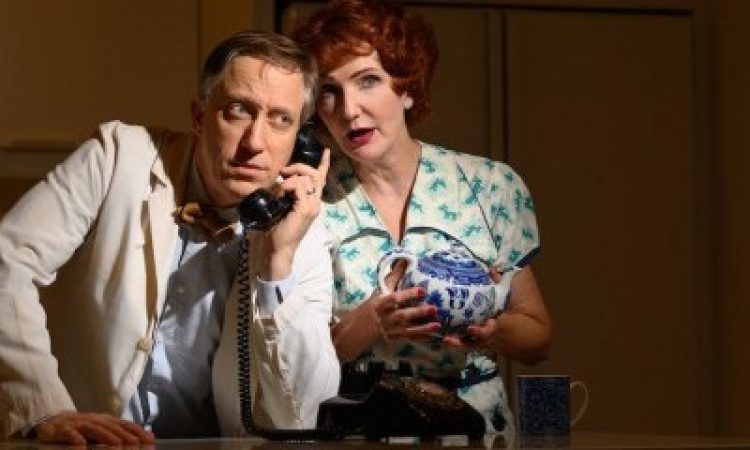
Although the Idiopathic Ridiculopathy Consortium (Tina Brock, Producing Artistic Director), advertises itself as “dedicated solely to the production … of absurdist drama,” its Fringe show, Come Back, Little Sheba (1950), by William Inge, seems far from my conceptions of that genre. The play is realistic, sad in a dated sort of way, funny at times, narratively clear, and beautifully situated in the Bethany Mission Gallery, which features in its collection of “outsider art” an entire wall display of 1950s radios and toasters. They’re gorgeous! The upstairs portion of the gallery is the perfect setting for a drama featuring modernist couches, vinyl-covered kitchen chairs, Formica table-tops, and the like. The staging also moved the actors up and down the stairways of the gallery and to areas to the sides and back of the audience seating, effectively enveloping viewers in the world of the story’s characters.
Hardly absurd is the story of a long-married and deeply unhappy couple. The Delaneys—Lola (played by Brock) and “Doc”— (John Zak) live in “an old house in one of those semi-respectable neighborhoods in a Midwestern city” (according to the program). As the play unfolds, we learn of the embarrassments of the Delaney’s youthful romance, of their having to marry because of her accidental pregnancy, the loss of that child and inability to have another, the failure of Doc’s medical studies because of the forced marriage. He descends into abusive alcoholism in the course of his blah chiropractic career, as Lola attempts to salvage her emotional life through attachment to a puppy, Little Sheba, who has run off and never reappears, despite her anxious watch for it.
Highlighting the Delaney’s individual and joint misery is their pretty young boarder, Marie Buckholder (Barbaraluz Orlanda), supposedly pursuing a college degree, but far more dedicated to pursuit of the handsome bucks (Carlos Forbes, Adam Ritter) who romance her. Lola and Doc read Marie’s behavior oppositely, Lola attempting to support and excuse Marie’s romantic longings, as Doc becomes increasingly unhinged by his anguished perceptions of her permissive sexuality. Adding doses of humor, pathos, and narrative support are a neighbor, Mrs. Coffman (Kassy Bradford), and various delivery men (Tomas Dura, Adam Ritter, Bill Rahill), who enliven Lola’s drab life with daily exchanges of empty banter. The gangly Dura, as a milkman bragging to Lola about his bodybuilding successes, elicited welcome laughter from the audience in the course of this deeply sad story.
The cast, adequate to the show’s somewhat dated, if still moving, characterizations and narrative, is fortunate in its lead actors. Brock makes a charming, touching, patiently suffering Lola, whose break-out moments dancing, as she did in her high-school prom years, to the radio are highlights of her dull daily life, and of the show. Zak’s portrayal of Doc moves from stiff Alcoholics Anonymous-adherent to hatchet-wielding, out-of-control drunk, and finally to puppy-dog repentance. Perhaps Sheba has, in fact, come back.
Come Back, Little Sheba, by William Inge, The Idiopathic Ridiculopathy Consortium, Bethany Mission Gallery, 2019 Fringe Festival, Sept. 5-21.