Two svelte women subtly slither around one another on a dimly lit stage. Indeterminate melodrama is in the air. The lights start to come up slowly. Soft shimmers reveal that the performers are the choreographers of the evening, Evalina “Wally” Carbonell and Melissa Rector. They’ve cast themselves in the first of many shorter connected dances. Although Honey is billed as a co-creation, it is very much a mixed bill presented as a through-choreographed evening work. The artists’ sections are wonderfully distinct from each other.
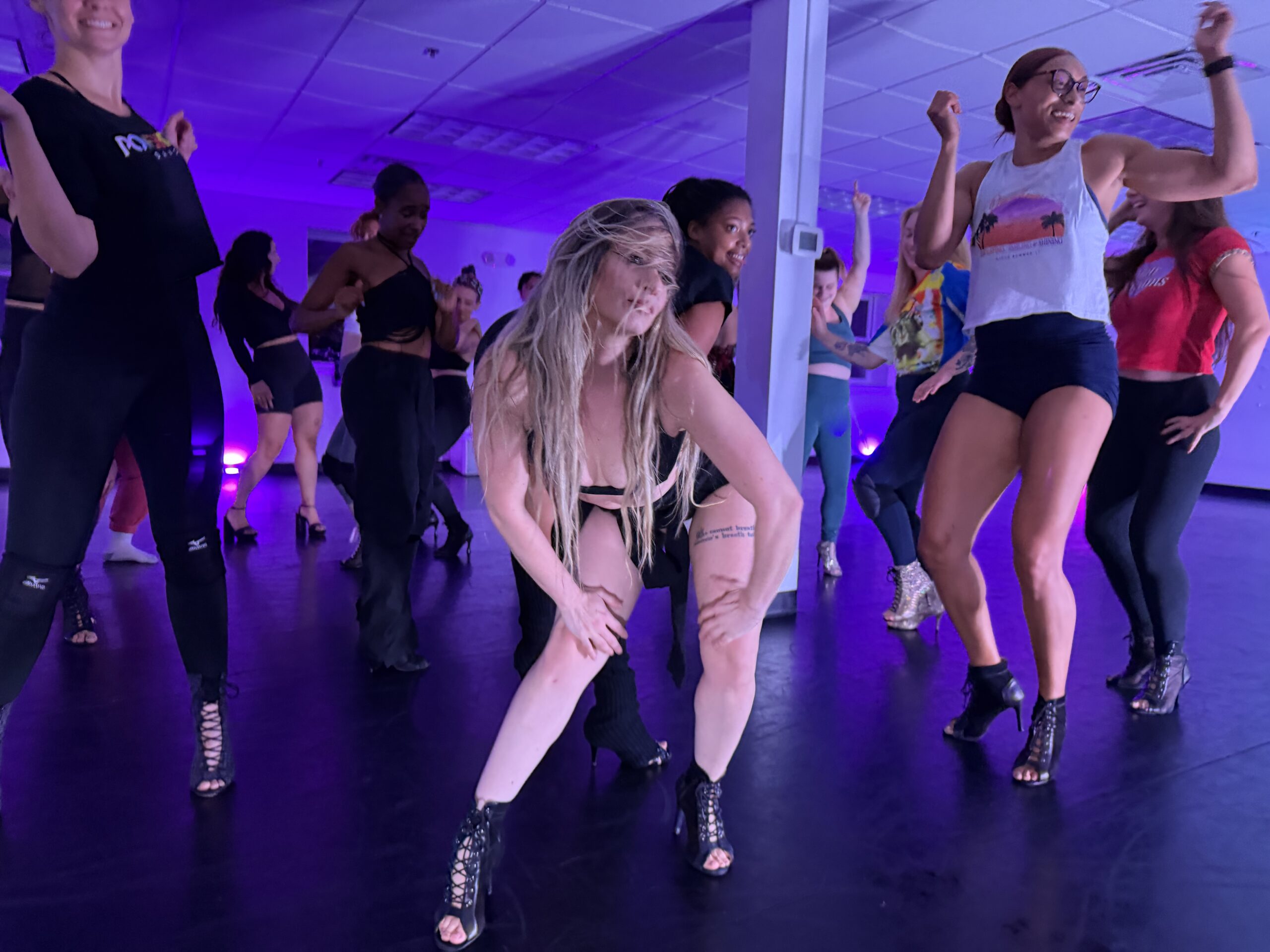
Rector, the Assistant Artistic Director of Koresh Dance Company, comes from a particular artistic lineage that includes Luigi and Graham techniques, with noticeable influences of Gaga. The dancers she has cast share a similar body type and performance quality—strong, oozing with confidence, noble. If one squints, they could all be Rector’s sisters. Tonally, Rector’s pieces play the same emotional note. Her dancers unironically undulate their spines and pose on one foot with a cocked hip, slap their thighs, and jitter and jirate as if trying to shake off an evil spirit. Each time they enter the stage I catch a whiff of hair spray.
The eye gaze is consistent from dancer to dancer – they all maintain eye contact with an unknown entity just above the audience’s head. They reveal the whites of their eyes, as if warding off an ineffable, always present predator. I wonder who or what this could be. It’s as if they’re in a spaceship orbiting the Earth, and upon their descent home they discover our planet is on fire. At least, that was the storyline I created in my head while watching Rector’s works. I am dying to know where that look of horror originates. I want to believe it is more than melodrama for entertainment’s sake. It takes great commitment to maintain the strained expressions. What is feeding the drama?
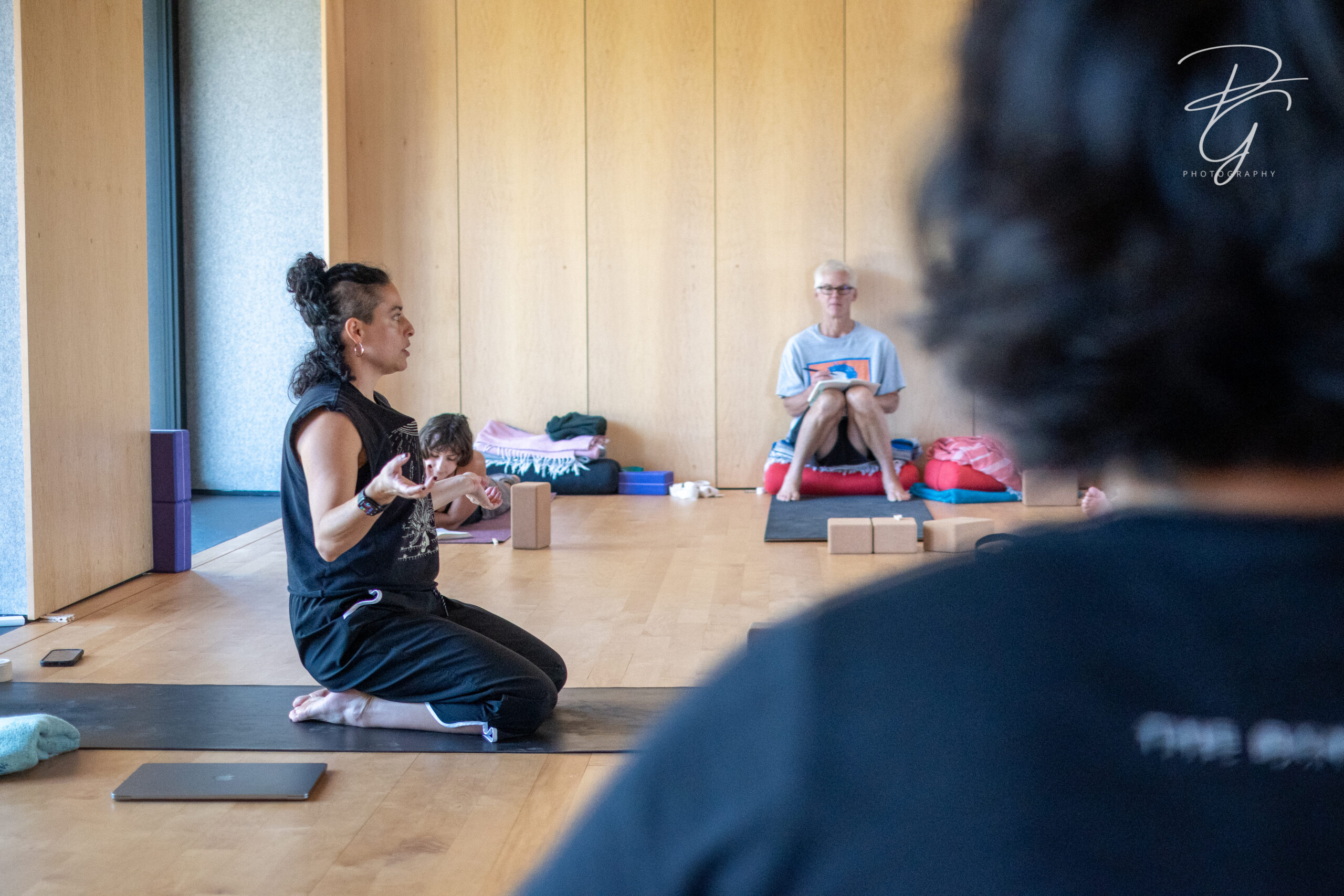
In great contrast, Evalina “Wally” Carbonell’s work is ambitious and mirthful. Where Rector’s point of departure is emotional turbulence, Wally’s impetus for choreographic gesture is a deep fascination with the body and its mysteries. Whereas Rector spends her time outside of this Honey project embroiled as an artistic director of an in-demand contemporary dance organization, Wally instructs Philadelphians in Gyrotonics. This experience in the somatic modality is delightfully evident in her choreography.
Wally’s dancers expansively eat up space through inventive spiraling, never languishing energetically. The dancers shape their limbs in relation to their core into sculptural hieroglyphs. Much of the phrase work is sped up yoga and Pilates. In particular, a motif recurs of the dancers sitting on their derrieres with their legs crossed in a lotus position. Balancing, just barely, on their knee caps, they suspend their softly shaped arms and fingers parallel to the ground, and breathe through this brittle moment of balance on pretzeled legs.
Creating a completely new evening-length work is no small feat, and so it is understandable that two independent choreographers would choose to co-produce their work in the context of the full-to-the-brim Philadelphia Fringe Festival. However, I believe both choreographers could stand on their own two legs artistically. Their work would have more impact when not in such close proximity to the other’s. Each artist’s voice is distinct to the point that, at times, I feel it is at odds with the other’s. I wish there was more space for each artist to fully execute her vision.
Honey, Evalina “Wally” Carbonell / Melissa Rector, Chi Mac, 2019 Philly Fringe Festival, September 13 – 15.